Views: 0 Author: Site Editor Publish Time: 2026-02-12 Origin: Site
Weather influences safety, planning, and daily decisions, yet it cannot be understood by observation alone. Meteorology relies on precise instruments that translate atmospheric conditions into measurable data. From temperature and pressure to wind and radiation, sensors form the foundation of modern meteorological monitoring. Without them, forecasting accuracy and early warnings would quickly decline. In this article, you will explore the key sensors used in meteorology, how they work together as systems, and why understanding their roles helps organizations build reliable, decision-ready monitoring solutions.
Temperature sensors form the foundation of meteorological monitoring. They track how air temperature changes over time and space. Most systems use thermistors, RTDs, or thermocouples. Thermistors react quickly to small temperature shifts, making them ideal for real-time monitoring. RTDs offer excellent long-term stability and accuracy, which supports climate studies. Thermocouples handle wider ranges and harsher conditions. Proper placement matters. Sensors must sit inside radiation shields to reduce solar influence. Accurate temperature data improves forecasts, supports heat stress analysis, and strengthens long-term atmospheric models.
Humidity sensors measure water vapor in the air, a key factor in weather formation. Most modern systems rely on capacitive or resistive sensing elements. Capacitive sensors dominate meteorological monitoring because they remain stable across wide humidity ranges. They respond well to gradual moisture changes linked to cloud development and precipitation. Reliable humidity data supports dew point calculation, fog prediction, and heat index analysis. In agriculture, it helps estimate crop stress. When paired with temperature sensors, humidity sensors provide a clearer picture of atmospheric comfort and instability.
In meteorological systems, atmospheric pressure sensors capture subtle changes in the weight of the air column above a location. These variations often appear before visible weather changes, which makes pressure data a critical input for forecasting, monitoring, and numerical modeling. To support engineering selection and system design, the information below organizes key aspects such as technology, performance, applications, and operational considerations in a clear structure.
| Dimension | Description | Typical Values / Ranges | Unit | Practical Application | Key Considerations |
|---|---|---|---|---|---|
| Sensor type | Piezoresistive | High sensitivity with temperature compensation | — | Automated weather stations, airport systems | Requires effective thermal compensation |
| Capacitive | Low power consumption, stable long-term output | — | Remote meteorological monitoring networks | Sensitive to mechanical stress | |
| Measurement principle | Pressure-induced diaphragm deformation | Linear relationship between pressure and signal | — | High-resolution pressure acquisition | Demands reliable sealing |
| Measurement range | Standard surface pressure | 300–1100 | hPa | Sea level to high-altitude sites | Confirm lower limit at altitude |
| Resolution | Smallest detectable pressure change | 0.01–0.1 | hPa | Detection of fronts and pressure tendencies | Linked to electronic noise control |
| Absolute accuracy | Factory-calibrated accuracy | ±0.1 to ±0.5 | hPa | Numerical weather prediction inputs | Periodic recalibration improves stability |
| Response time | Pressure change to stable output | <1–2 | s | Rapid identification of pressure shifts | Vent design affects response |
| Output signal | Electrical interface | Analog, RS485, SDI-12 | — | Easy integration with AWS and loggers | Interface compatibility matters |
| Typical installation | Enclosed, ventilated housing | Shielded from direct wind and radiation | — | Weather stations, buoys | Vent ports must resist dust and moisture |
| Primary applications | Weather system identification | Low pressure linked to storms | — | Meteorological monitoring | Best interpreted with wind and humidity |
| Model initialization | Ground-level boundary conditions | — | Forecast models | Time synchronization is essential | |
| Aviation support | Altitude correction and safety | — | Runway and airport monitoring | High reliability required |
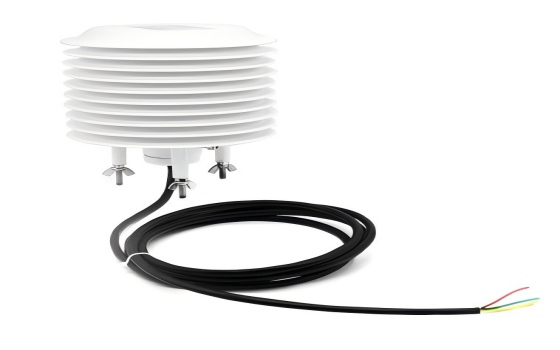
Wind speed sensors show how fast air moves near the surface. They play a critical role in meteorological monitoring, aviation, and renewable energy planning. Cup and propeller anemometers remain common due to their simplicity. Ultrasonic anemometers are growing in use because they have no moving parts. They measure wind speed using sound travel time, which reduces wear. Accurate wind speed data improves storm tracking, dispersion modeling, and safety decisions. It also helps operators assess structural loads on buildings and infrastructure.
Wind direction sensors indicate where the wind originates. Most use mechanical vanes linked to encoders. When aligned correctly, they provide stable directional data. Wind direction matters because it explains how weather systems move and interact with terrain. In meteorological monitoring, direction data improves forecast accuracy and supports air quality modeling. Installation height and orientation affect results. Sensors must align with true north to avoid directional bias. When combined with speed data, wind direction completes the basic wind profile.
Combined wind sensors measure speed and direction in one unit. They reduce installation complexity and improve data consistency. Many meteorological monitoring networks prefer these sensors because they simplify maintenance. Ultrasonic combined sensors dominate professional use today. They provide fast response and consistent outputs under changing conditions. Integrated designs also reduce alignment errors between separate instruments. For large networks, combined wind sensors help standardize data across sites and support scalable monitoring strategies.
Tipping bucket rain gauges convert rainfall into discrete mechanical events, typically with each tip representing 0.1, 0.2, or 0.5 mm of precipitation. In meteorological monitoring, they are well suited for moderate rainfall climates where long-term consistency matters. Their time-stamped tip data allows calculation of rainfall intensity and accumulation. When paired with data loggers, they support hydrological modeling and climatological analysis. Correct siting, wind shielding, and routine inspection help maintain measurement stability over multi-year observation periods.
Weighing and pressure-based precipitation sensors measure the total mass or force of collected precipitation, providing direct liquid water equivalent values. This approach enables accurate monitoring of rain, snow, and mixed events without conversion assumptions. In meteorological monitoring, these sensors are preferred for flood forecasting, watershed management, and cold-region hydrology. Their continuous output captures high-intensity events more reliably, which improves runoff estimation and emergency response planning in extreme weather scenarios.
Optical precipitation sensors analyze the interruption or scattering of infrared or laser beams by falling particles. By evaluating signal duration and amplitude, they estimate drop size, fall speed, and precipitation type. In meteorological monitoring, this allows rapid discrimination between rain, snow, and drizzle. Their fast response supports intelligent traffic systems and aviation operations. Because they have no moving components, optical sensors are suitable for unattended deployments where consistent real-time precipitation detection is required.
Pyranometers measure shortwave solar radiation reaching the surface. They convert sunlight into electrical signals using thermopile elements. In meteorological monitoring, solar radiation data supports evapotranspiration modeling and climate research. It also informs solar energy planning. Accurate radiation data explains temperature patterns and surface energy balance. Proper leveling and cleaning ensure consistent readings. Pyranometers often operate alongside temperature and humidity sensors to provide complete surface observations.
UV radiation sensors quantify ultraviolet energy within specific wavelength bands, most commonly UV-A (315–400 nm) and UV-B (280–315 nm). In meteorological monitoring, these measurements help evaluate biological exposure and photochemical activity in the atmosphere. UV-B data is especially relevant because it influences plant physiology, human health, and material degradation. Long-term UV records support studies of ozone variability and seasonal radiation patterns. When integrated with cloud and aerosol data, UV sensors improve understanding of how atmospheric conditions modify surface radiation levels.
Sunlight duration and light intensity sensors describe how much usable solar energy reaches the surface over time. Sunshine duration sensors typically register periods when direct irradiance exceeds a defined threshold, while light sensors measure illumination in lux or solar power density. In meteorological monitoring, these datasets support crop phenology models, greenhouse management, and photovoltaic performance analysis. They also help identify shading effects from terrain or urban structures, providing valuable context for interpreting temperature and radiation observations.
Cloud and visibility sensors add a vertical dimension to meteorological monitoring, which surface instruments alone cannot provide. Ceilometers emit short laser pulses upward and measure the return signal from cloud layers, allowing precise calculation of cloud base height, typically from 0 to 7.5 km above ground. This information is critical for aviation decision-making, especially for instrument flight rules. Visibility sensors, using forward-scatter or backscatter optics, quantify atmospheric clarity in meters. Together, they support precipitation nowcasting, fog detection, and transportation safety management.
Lightning detection sensors observe electromagnetic emissions produced by lightning discharges. By analyzing signal timing and amplitude across a sensor network, systems can locate strikes within a few hundred meters. In meteorological monitoring, lightning frequency and density often correlate with storm intensity and updraft strength. This makes lightning data valuable for identifying rapidly developing convective systems. Real-time lightning information supports early warnings for airports, outdoor operations, and power utilities. It also enhances storm classification when combined with radar and precipitation observations.
Soil and surface sensors connect atmospheric processes with land response, which is essential for applied meteorological monitoring. Soil moisture sensors measure volumetric water content, often in percent or m³/m³, while soil temperature probes track thermal conditions below ground. These variables influence evaporation rates, boundary-layer development, and local weather feedbacks. In agriculture, soil data guides irrigation timing and drought assessment. In hydrology, it improves runoff prediction. When integrated with weather observations, soil sensors support more accurate environmental and resource management decisions.
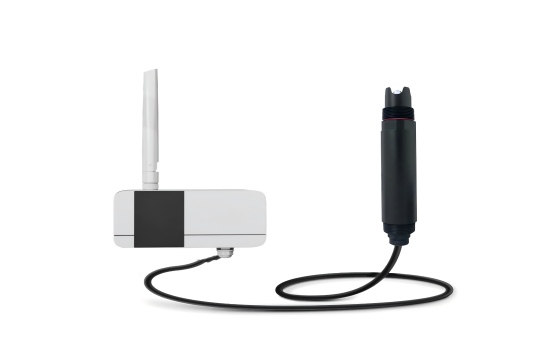
Automated weather stations integrate multiple calibrated sensors with data loggers and communication modules. In meteorological monitoring, they typically operate at sampling intervals from one minute to one hour, ensuring continuous surface observations. AWS units support standardized exposure and siting practices, which improves data comparability across regions. Their automated quality checks help identify sensor drift or signal loss. Because AWS data streams directly into forecasting systems, they play a central role in real-time analysis, historical archives, and decision-support platforms.
Remote sensing platforms extend meteorological monitoring into the vertical and horizontal dimensions. Radiosondes provide high-resolution profiles of temperature, humidity, pressure, and wind up to the stratosphere, which is essential for model initialization. Satellite sensors observe cloud cover, radiation balance, and atmospheric motion over vast areas. These observations supply context that surface stations cannot capture alone. By combining remote sensing with ground data, meteorologists achieve more complete and spatially consistent atmospheric assessments.
Large-scale meteorological monitoring depends on sensor networks rather than single stations. By distributing calibrated instruments across a region, these networks improve spatial resolution, reduce data gaps, and ensure that observations remain comparable over time and between locations.
| Dimension | Description | Typical Values / Ranges | Unit | Practical Application | Key Considerations |
|---|---|---|---|---|---|
| Network type | Mesonet (regional dense network) | Station spacing: 5–50 | km | Local forecasting, severe weather detection | Denser spacing increases maintenance load |
| National observation network | Station spacing: 50–300 | km | Synoptic-scale meteorological monitoring | Limited resolution for local effects | |
| Spatial resolution | Horizontal coverage detail | Defined by station density | km | Captures microclimates and terrain effects | Must match forecast use case |
| Temporal resolution | Data sampling interval | 1–10 | min | Real-time monitoring and alerts | Higher frequency increases data volume |
| Sensor consistency | Same sensor models across sites | Identical specs and firmware | — | Ensures comparable measurements | Mixed hardware increases bias risk |
| Calibration interval | Scheduled recalibration cycle | 6–24 | months | Long-term climate trend analysis | Field conditions may shorten interval |
| Data accuracy control | Cross-station comparison | ±0.1–0.5 (pressure) | hPa | Detects sensor drift and faults | Requires reference stations |
| Communication method | Data transmission protocol | Cellular, radio, satellite | — | Real-time network data flow | Coverage reliability matters |
| Data synchronization | Time alignment across stations | <1 | s | Model assimilation and trend analysis | GPS or NTP commonly used |
| Quality control | Automated QC algorithms | Range, step, persistence tests | — | Removes outliers and errors | Thresholds must be climate-aware |
| Primary applications | Forecast model input | Surface boundary conditions | — | Numerical weather prediction | Consistent metadata required |
| Public safety operations | Storm and hazard monitoring | — | Emergency management | Redundancy improves reliability | |
| Climate analysis | Long-term trend detection | Decades | — | Climate research |
Tip:When designing a meteorological monitoring network, consistent sensor models, unified calibration schedules, and synchronized timestamps usually improve data quality more than simply increasing the number of stations.
This article outlines the essential sensors used in meteorology and how they work together to observe the atmosphere. Temperature, humidity, pressure, wind, precipitation, radiation, and specialized sensors form the backbone of modern meteorological monitoring systems. When integrated through stations, networks, and remote platforms, they deliver accurate, consistent data for forecasting and climate analysis. BGT Hydromet supports these needs by providing reliable meteorological sensors and integrated solutions that help organizations improve data quality, operational safety, and long-term environmental decision making.
A: Meteorology uses temperature, humidity, pressure, wind, precipitation, and radiation sensors for meteorological monitoring.
A: Meteorological monitoring needs multiple sensors because weather processes involve interacting atmospheric variables.
A: In meteorological monitoring, sensors integrate through weather stations and networks to provide consistent data.
A: Yes, automated weather stations form the backbone of modern meteorological monitoring systems.
A: Cost depends on sensor accuracy, durability, calibration needs, and system integration requirements.