According to a 2023 UNESCO report, over 80% of wastewater is discharged without treatment, exacerbating environmental pollution. The United Nations Sustainable Development Goals (SDGs) 6, 13, and 14—focused on clean water, environmental protection, and marine life—can only be achieved through effective wastewater treatment. The U.S. Environmental Protection Agency (EPA) identifies pH as one of the top five critical parameters to monitor, alongside COD, BOD, TSS, and ammonia, making pH sensors indispensable for wastewater treatment plants (WWTPs) to ensure regulatory compliance and process efficiency.
1. How pH Sensors Work in Wastewater Treatment
1.1 Core Working Principle
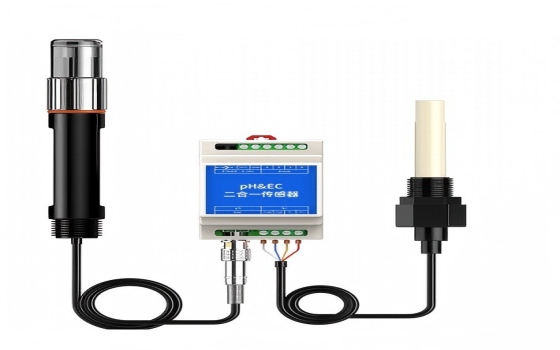
pH sensors operate on an electrochemical principle, measuring the hydrogen ion (H⁺) concentration in wastewater to determine acidity (pH < 7) or alkalinity (pH > 7). A standard pH sensor consists of two key components: a sensing electrode (typically glass with a hydrated gel layer) and a reference electrode (often silver/silver chloride). When immersed in wastewater, hydrogen ions interact with the gel layer, creating a potential difference (PD) between the sensing and reference electrodes. This PD is translated into a precise pH value using the Nernst Equation.
Notably, wastewater treatment processes require pH monitoring within 5–9. Even minor fluctuations can disrupt biological treatments, chemical reactions, and equipment integrity—low pH causes corrosion, while high pH leads to scaling and clogging.
1.2 Critical Calibration & Maintenance
Accurate pH measurements depend on regular calibration and maintenance:
• Calibration Frequency: Calibrate every 3–6 months for wastewater applications and every 6 months for clean water. Calibration uses standard solutions (pH 4, 7, 10) to adjust sensor accuracy.
• Cleaning Protocols: Remove fouling (from proteins, sulfides, or debris) using alcohol (organic contaminants), potassium chloride (general fouling), or diluted HCl/NaOH (inorganic deposits).
• Storage Best Practices: Avoid extreme temperatures and prolonged dryness, which damage the sensor’s gel layer and reference system.
![water ph sensor]()
wastewater ph probe
2. Key Features of Top-Tier pH Sensors for Wastewater
Wastewater environments are harsh—high chemical exposure, physical stress, and dynamic conditions demand sensors with specific robust features:
2.1 Durability & Anti-Fouling Design
Premium sensors use rugged materials like titanium, Ryton (PPS), ABS, or Ultem to resist corrosion and physical damage. Self-cleaning flat surfaces or extended reference paths (ERP) prevent fouling, ensuring long-term accuracy. An IP68 rating (waterproof and dust-tight) allows submersion up to 3 meters, ideal for in-pipeline or tank installations.
2.2 Accuracy & Stability
Accuracy of ±0.05 pH and stability (≤0.01 pH change in 24 hours) are non-negotiable—minor deviations can disrupt biological processes or lead to non-compliance fines. Reliable reference systems (gel-filled or solid-state) maintain stability in complex wastewater matrices.
2.3 Temperature Compensation & Response Time
pH values vary with temperature, so automatic temperature compensation (ATC) (operating range: 0–80°C or higher) is essential for accurate readings. Fast response times (≤8 seconds for flowing systems, ≤14 seconds for static) enable real-time process control.
2.4 Digital Connectivity & Integration
Modern sensors feature digital technologies like Memosens (inductive, non-contact signal transmission) to avoid corrosion at connection points. Dual outputs (4–20mA analog and RS-485 digital with Modbus protocol) ensure seamless integration with SCADA and PLC systems, simplifying data acquisition and remote monitoring.
3. Applications of pH Sensors Across Wastewater Treatment Stages
pH sensors are used at every critical stage of wastewater treatment to optimize processes and ensure compliance:
3.1 Primary Treatment
Monitor influent pH to ensure it falls within the optimal range (6.5–8.5) for subsequent processes (e.g., coagulation, flocculation). Adjustments here prevent downstream process failures.
3.2 Secondary Treatment
Maintain pH (6.8–7.5 for aerobic digestion) to support microbial activity in activated sludge processes. Microbes are pH-sensitive—imbalances reduce pollutant breakdown efficiency.
3.3 Tertiary Treatment & Discharge
Verify treated water meets regulatory pH standards before discharge to protect aquatic ecosystems. Strict monitoring is critical for industrial wastewater (e.g., chemical, electroplating) and agricultural runoff (contaminated with fertilizers/pesticides).
4. Why pH Sensors Are Critical for WWTP Success
• Process Optimization: Real-time pH data allows operators to adjust chemical dosing (acids/bases) dynamically, ensuring efficient treatment.
• Cost Reduction: Prevents non-compliance fines and over-treatment by maintaining optimal conditions. Reduces equipment repair costs by minimizing corrosion/scaling.
• Environmental Protection: Ensures discharged water does not harm aquatic ecosystems, aligning with global sustainability goals.
Conclusion
pH sensors are foundational to efficient, compliant, and sustainable wastewater treatment. By investing in high-quality pH sensors and following proper maintenance protocols, WWTPs can meet environmental standards, reduce costs, and contribute to global clean water goals.
FAQs
Q1: How often should I calibrate my pH sensor?
Calibrate every 3–6 months for wastewater and every 6 months for clean water.
Q2: What is the typical lifespan of a pH sensor?
12–24 months, depending on water quality and maintenance frequency. Rugged designs (e.g., titanium, PPS casings) and regular cleaning extend lifespan.
Q3: Can pH sensors measure non-aqueous solutions?
No. pH sensors are designed for aqueous environments (water/wastewater). They provide unstable readings in alcohols, oils, or organic solvents.