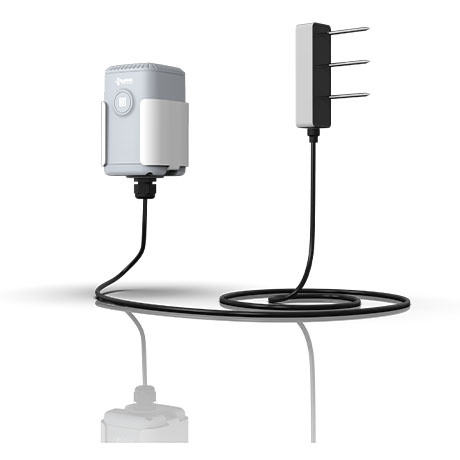
1. Introduction: The Core Value of 7 in 1 Soil Integrated Sensors
In the era of precision agriculture and sustainable environmental management, real-time and comprehensive grasp of soil conditions has become a key factor in improving resource utilization efficiency and production benefits. The 7 in 1 soil integrated sensor, as a high-integration monitoring device, integrates the measurement functions of 7 core soil parameters (including moisture, temperature, electrical conductivity (EC), pH, and nutrient levels (NPK), etc.) into a single unit, realizing simultaneous and synchronous monitoring of multiple soil indicators.
Compared with single-parameter soil sensors, the 7 in 1 integrated sensor breaks the limitations of fragmented data collection, provides a holistic view of soil health status, and lays a solid foundation for data-driven decisions such as scientific irrigation, precise fertilization, and rational land management. Currently, there are various types of soil sensing technologies on the market, and clarifying the working principles, performance differences, and application scenarios of 7 in 1 soil integrated sensors is crucial for users to select suitable products and give full play to their application value. This guide will systematically sort out the relevant knowledge of 7 in 1 soil integrated sensors to help users establish a comprehensive and in-depth understanding.
2. Core Concepts: Key Parameters Monitored by 7 in 1 Soil Integrated Sensors
The core advantage of the 7 in 1 soil integrated sensor lies in its multi-parameter measurement capability, which can comprehensively reflect the physical and chemical properties of the soil. The 7 key parameters it monitors are closely related to soil health and plant growth, and their specific connotations and measurement significance are as follows:
2.1 Soil Moisture (Volumetric Water Content, VWC)
Soil moisture refers to the amount of water contained in the soil, usually expressed by volumetric water content (VWC), that is, the ratio of the volume of water in the soil to the total volume of the soil. It is the most direct indicator reflecting the water supply capacity of the soil to plants. Accurate measurement of VWC is the basis for formulating scientific irrigation schedules, avoiding water waste caused by over-irrigation and yield reduction caused by under-irrigation.
It should be distinguished from soil water potential (also known as soil suction), which refers to the energy state of water in the soil and reflects the difficulty of plants absorbing soil water. The 7 in 1 soil integrated sensor mainly focuses on the measurement of VWC, providing quantitative data support for irrigation decision-making.
2.2 Soil Temperature
Soil temperature directly affects seed germination, root growth, microbial activity, and nutrient conversion efficiency in the soil. For example, low temperatures will slow down seed germination and root absorption, while excessively high temperatures will inhibit microbial activity and reduce the availability of soil nutrients. The 7 in 1 soil integrated sensor can real-time monitor soil temperature, helping users adjust planting time and field management measures according to temperature changes.
2.3 Electrical Conductivity (EC)
Soil electrical conductivity reflects the content of soluble salts in the soil. High EC values indicate high soil salinity, which will cause osmotic stress to plants, affect water absorption, and even lead to plant wilting and death. The 7 in 1 soil integrated sensor monitors EC to help users grasp soil salinity dynamics in real time, guiding the selection of salt-tolerant crops and the rational use of irrigation water and fertilizers.
2.4 Soil pH
Soil pH (acidity and alkalinity) determines the availability of soil nutrients. Most crops grow best in neutral to slightly acidic soils (pH 6.0-7.5). In acidic soils, the availability of phosphorus, calcium, and magnesium will decrease; in alkaline soils, iron, zinc, and manganese will easily form insoluble compounds, which are difficult for plants to absorb. The 7 in 1 soil integrated sensor can accurately measure soil pH, providing a basis for soil improvement (such as applying lime to acidic soils and gypsum to alkaline soils).
2.5 Soil Nutrients (NPK)
Nitrogen (N), phosphorus (P), and potassium (K) are the three essential nutrients for plant growth, known as NPK. Nitrogen is related to the vegetative growth of plants, phosphorus affects flowering and fruiting, and potassium enhances the stress resistance of plants. The 7 in 1 soil integrated sensor monitors NPK content to help users grasp the nutrient status of the soil, formulate precise fertilization schemes, reduce fertilizer waste and environmental pollution.
It should be noted that the NPK measurement of soil integrated sensors is usually based on the principle of electrical conductivity: the sensor measures the electrical conductivity of the soil, and the manufacturer multiplies the measured value by a corresponding coefficient (based on the conventional content of NPK in the soil) to obtain the theoretical value of NPK. Due to the differences in on-site soil types and environments, this value is an empirical reference value and cannot completely replace the accurate measurement of professional laboratory equipment.
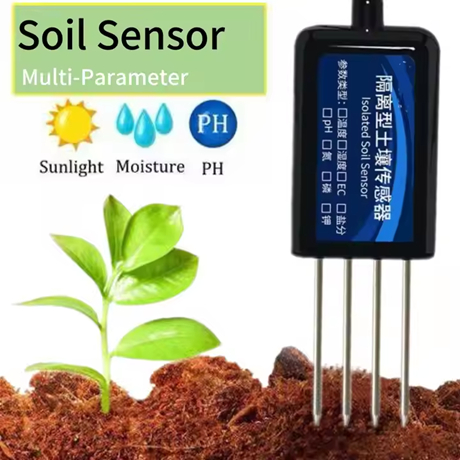
![02]()
Soil Sensor
3. Working Principles of 7 in 1 Soil Integrated Sensors
The 7 in 1 soil integrated sensor integrates multiple sensing technologies to realize the simultaneous measurement of different parameters. Its working principle is mainly divided into two parts: the sensing principle of each parameter and the integrated data transmission principle. Among them, the sensing principle of core parameters such as soil moisture and EC determines the measurement accuracy, and the common technical routes are as follows:
3.1 Sensing Principles of Core Parameters
3.1.1 Soil Moisture & EC Measurement: Dielectric Permittivity Technology
Most high-performance 7 in 1 soil integrated sensors adopt dielectric permittivity technology (including TDR, FDR, and capacitance types) for moisture measurement, which is more reliable than traditional resistance technology. Each substance in the soil has a unique dielectric constant (the ability to store electrical charge): air is 1, soil solids are about 3-6, and water is as high as 80. Since the volume of soil solids is relatively stable in the short term, the change of soil dielectric constant is mainly determined by the relative content of water and air, which can accurately reflect the volumetric water content (VWC) of the soil.
According to different measurement methods, dielectric permittivity technology is divided into three categories:
• Capacitance Technology: Treat the soil as a component of the capacitor in the circuit, measure the capacitance value of the soil, and convert it into VWC through a calibration curve. High-frequency capacitance sensors (working frequency above 50 MHz) can avoid the polarization of ions in the soil water, reducing the interference of EC on moisture measurement.
• TDR (Time-Domain Reflectometry) Technology: Emit electrical wave signals, measure the travel time of reflected waves along the transmission line, calculate the soil dielectric constant, and then obtain VWC. The TDR signal contains multiple frequency components, which has strong anti-interference ability to soil salinity.
• FDR (Frequency-Domain Reflectometry) Technology: Use the soil as a capacitor to measure the maximum resonant frequency of the circuit. The resonant frequency changes with the soil dielectric constant, and VWC is obtained through the corresponding relationship between resonant frequency and moisture content.
The measurement of EC is based on the electrical conductivity of the soil solution. The sensor emits a small-amplitude alternating current, measures the resistance of the soil between the electrodes, and converts it into EC value, which reflects the salt content of the soil.
3.1.2 Limitations of Resistance Technology
Some low-cost sensors adopt resistance technology for moisture measurement: by creating a voltage difference between two electrodes, the current carried by ions in the soil water is measured, and the moisture content is inferred from the resistance value. However, this technology relies on the assumption that the ion concentration in the soil is constant. In actual applications, factors such as fertilization, irrigation, and soil type changes will cause fluctuations in ion concentration, leading to large measurement errors. Therefore, resistance technology is only suitable for scenarios with low accuracy requirements (such as home gardening) and cannot meet the needs of precision agriculture and scientific research.
3.1.3 Measurement Principles of Other Parameters
• Soil Temperature: Adopt thermistor or thermocouple technology. The resistance or electromotive force of the sensor changes linearly with temperature, and the temperature value is obtained through signal conversion and calibration.
• Soil pH: Use the glass electrode method. The sensor's glass electrode and reference electrode form a galvanic cell in the soil solution. The potential difference of the galvanic cell changes with the pH of the solution, and the pH value is calculated through measurement.
• Soil NPK: As mentioned earlier, it is indirectly measured based on the EC value. The sensor first measures the soil EC, and combines the empirical coefficient of the corresponding nutrient to output the theoretical NPK value, which needs to be used as a reference in practical applications.
3.2 Integrated Data Transmission Principle
The 7 in 1 soil integrated sensor realizes intelligent data transmission and management through the integrated design of hardware and software:
1. Multi-Parameter Synchronous Collection: The sensor integrates multiple sensing units (moisture, temperature, EC, etc.) into one, and the built-in microprocessor synchronously collects data of each parameter to ensure the consistency of the collection time and avoid data deviation caused by asynchronous collection.
2. Standardized Data Transmission: Data is transmitted through standard communication protocols such as RS485 (Modbus-RTU), SDI-12, LoRaWAN, or NB-IoT. RS485 is suitable for wired short-distance transmission (such as connecting to on-site data loggers); LoRaWAN and NB-IoT are low-power wide-area network technologies, suitable for wireless long-distance transmission, enabling remote monitoring of large-area farmland and environmental sites.
3. Temperature Compensation: Built-in temperature compensation module. Since the measurement results of parameters such as moisture, EC, and pH are easily affected by temperature, the sensor automatically corrects the data according to the real-time temperature, ensuring the accuracy of measurements under different environmental conditions.
4. Data Integration & Analysis: The transmitted data is connected to data loggers, wireless gateways or smart farming platforms. The platform integrates and analyzes the 7 parameters, generates data reports and trend charts, and sends early warning information when the parameters exceed the set threshold, providing actionable decision support for users.
4. Core Features of 7 in 1 Soil Integrated Sensors
Compared with single-parameter sensors or low-integration multi-parameter sensors, the 7 in 1 soil integrated sensor has obvious advantages in functionality, durability, and usability, which are specifically reflected in the following aspects:
4.1 Comprehensive Multi-Parameter Monitoring
Integrate 7 core soil parameters into one, realizing "one sensor, full coverage" of soil water, temperature, salt, acidity and alkalinity, and nutrients. It avoids the trouble of installing multiple single-parameter sensors, reduces the complexity of the monitoring system, and ensures the consistency and correlation of data, which is convenient for users to conduct comprehensive analysis of soil health status.
4.2 Robust & Durable Design
In order to adapt to long-term buried monitoring in the soil, high-quality 7 in 1 soil integrated sensors adopt robust and waterproof designs, usually with an IP68 protection rating (the highest level of waterproof and dustproof). The probes are made of stainless steel or alloy materials, which have strong corrosion resistance and can resist the erosion of soil moisture, salts, and organic matter, ensuring stable performance in harsh soil environments for a long time.
4.3 High Measurement Accuracy & Stability
Adopt advanced sensing technologies (such as high-frequency capacitance, TDR) and built-in temperature compensation modules to ensure measurement accuracy across different soil types and environmental conditions. After factory calibration and on-site verification, the measurement error of VWC can be controlled within 2-3%, which can meet the needs of precision agriculture and scientific research. At the same time, the sensor has small inter-sensor variability, ensuring the consistency of data from multiple monitoring points.
4.4 Flexible Connectivity & Easy Integration
Support a variety of communication protocols, which can be flexibly connected with data loggers, wireless gateways, cloud platforms, and smart irrigation systems. Through APIs, it can be integrated with existing farm management software to realize data interconnection and sharing. For remote monitoring scenarios, wireless communication technologies (LoRaWAN, NB-IoT) can be used to avoid the trouble of on-site wiring, reducing installation and maintenance costs.
4.5 Low Power Consumption & Long-Term Operation
Adopt low-power circuit design and support sleep mode. When there is no data collection and transmission, the sensor enters the sleep state to reduce power consumption. Equipped with long-life batteries, it can work continuously for several years without frequent battery replacement, which is suitable for long-term unattended monitoring scenarios (such as remote mountainous areas, large-scale farmland).
5. Selection Guide for 7 in 1 Soil Integrated Sensors
When selecting a 7 in 1 soil integrated sensor, users need to comprehensively consider application scenarios, accuracy requirements, budget, and system compatibility to avoid blind selection. The key selection criteria are as follows:
5.1 Clarify Application Scenarios
• Precision Agriculture: Prioritize sensors with high moisture and NPK measurement accuracy, support wireless communication (LoRaWAN/NB-IoT), and can be integrated with smart irrigation systems. It is recommended to choose high-frequency capacitance or TDR sensors to ensure measurement accuracy in different soil types.
• Scientific Research: Select sensors with traceable calibration certificates, small measurement errors, and stable long-term performance. TDR sensors or high-end capacitance sensors are preferred, and the compatibility with data loggers and analysis software should be considered.
• Environmental Monitoring: Focus on the durability and corrosion resistance of the sensor, and choose products with IP68 protection rating and stainless steel probes. It is required to support long-distance wireless transmission and adapt to complex outdoor environments (such as high temperature, humidity, and strong sunlight).
• Home Gardening/Amateur Use: Choose cost-effective products with simple operation and basic measurement functions. Resistance-type sensors can be selected if the accuracy requirement is not high, but it should be noted that their measurement results are only for reference.
5.2 Consider System Compatibility
Ensure that the sensor's communication protocol is compatible with the existing data logger, gateway, or cloud platform. For example, if the existing system uses RS485 (Modbus-RTU) protocol, a sensor that supports this protocol should be selected; if remote cloud monitoring is required, a sensor that supports LoRaWAN or NB-IoT and can access the corresponding cloud platform should be chosen. At the same time, consider the power supply mode of the sensor (battery, solar, or wired) to ensure that it matches the on-site power supply conditions.
5.3 Pay Attention to After-Sales Service
Choose products with perfect after-sales service, including technical support (installation guidance, calibration services), quality assurance (warranty period), and spare parts supply. For users who lack professional installation and calibration experience, it is particularly important to have professional technical team support to ensure the normal use of the sensor and the reliability of data.
6. Application Scenarios & Value of 7 in 1 Soil Integrated Sensors
The 7 in 1 soil integrated sensor, with its comprehensive monitoring capabilities and intelligent features, has been widely used in agriculture, environmental protection, land management and other fields, and has shown significant application value:
![Applications and Value of IoT Soil Moisture Sensor(1)]()
Application Scenarios & Value of 7 in 1 Soil Integrated Sensors
6.1 Precision Agriculture
In precision agriculture, the 7 in 1 soil integrated sensor is the core of the intelligent monitoring system. By real-time monitoring of soil moisture, temperature, EC, pH, and NPK, it provides a comprehensive basis for irrigation and fertilization decisions: when the moisture content is lower than the set threshold, the smart irrigation system is automatically triggered to realize precise water supply; according to the NPK content, the amount and time of fertilization are adjusted to avoid over-fertilization and nutrient loss. This not only improves crop yield and quality (yield can be increased by 10-15% in general), but also reduces water and fertilizer waste (water saving by 20-30%, fertilizer saving by 15-20%), and reduces environmental pollution caused by fertilizer runoff.
6.2 Land Management & Conservation
In land management and ecological conservation projects (such as desertification control, grassland restoration, and wetland protection), the 7 in 1 soil integrated sensor is used to monitor the dynamic changes of soil conditions. For example, in desertification control areas, monitoring soil moisture and EC can evaluate the effect of water-saving irrigation and sand fixation measures; in grassland areas, tracking soil nutrient changes can guide the rational grazing intensity and avoid grassland degradation. The collected long-term data can also provide a scientific basis for formulating sustainable land use strategies.
6.3 Environmental Monitoring
In environmental monitoring, the sensor is used to assess the impact of human activities and climate change on soil ecosystems. For example, in areas around industrial parks, monitor soil EC and pH to early warn of soil pollution (such as heavy metal pollution leading to pH changes); in agricultural non-point source pollution control areas, track the changes of soil NPK and EC to evaluate the effect of pollution control measures. In addition, the sensor can also be used to monitor soil conditions in landfill areas, ensuring that leachate does not pollute the surrounding soil.
6.4 Urban Agriculture & Horticulture
In urban agriculture scenarios such as rooftop gardens, community farms, and vertical greening, water and soil resources are limited, and the 7 in 1 soil integrated sensor can help realize refined management. By remotely monitoring soil moisture and nutrient status, urban farmers can adjust watering and fertilization measures in time, avoiding plant death caused by improper management. At the same time, the sensor's compact design and wireless communication function are suitable for the limited space of urban agriculture.
6.5 Scientific Research & Education
In scientific research, the 7 in 1 soil integrated sensor provides a convenient tool for large-scale and long-term soil data collection. Researchers can use the sensor network to study the interaction between soil parameters, plant growth, and climate factors, promoting the development of agricultural and ecological science. In the field of education, the sensor can help students intuitively understand the physical and chemical properties of the soil and the relationship between soil and plant growth, cultivating their scientific literacy and environmental protection awareness.
7. Conclusion
The 7 in 1 soil integrated sensor, as a high-integration and intelligent soil monitoring device, has broken the limitations of traditional fragmented soil monitoring, providing a comprehensive and efficient solution for precision agriculture, environmental protection, and land management. By clarifying the core parameters, working principles, and key features of the sensor, mastering scientific selection criteria, installation methods, and data management skills, users can give full play to its application value, realize the refined management of soil resources, and promote the sustainable development of agriculture and the ecological environment.
With the continuous advancement of sensing technology and IoT technology, the 7 in 1 soil integrated sensor will develop in the direction of higher accuracy, lower power consumption, and smarter integration in the future. Its application scenarios will be further expanded, and it will play a more important role in the fields of smart agriculture, carbon neutrality, and ecological civilization construction. For users, choosing a suitable 7 in 1 soil integrated sensor and giving full play to its data value is the key to seizing the opportunities of agricultural modernization and realizing the efficient utilization of resources.