1. Introduction: The Importance of Reliable Soil Moisture Monitoring
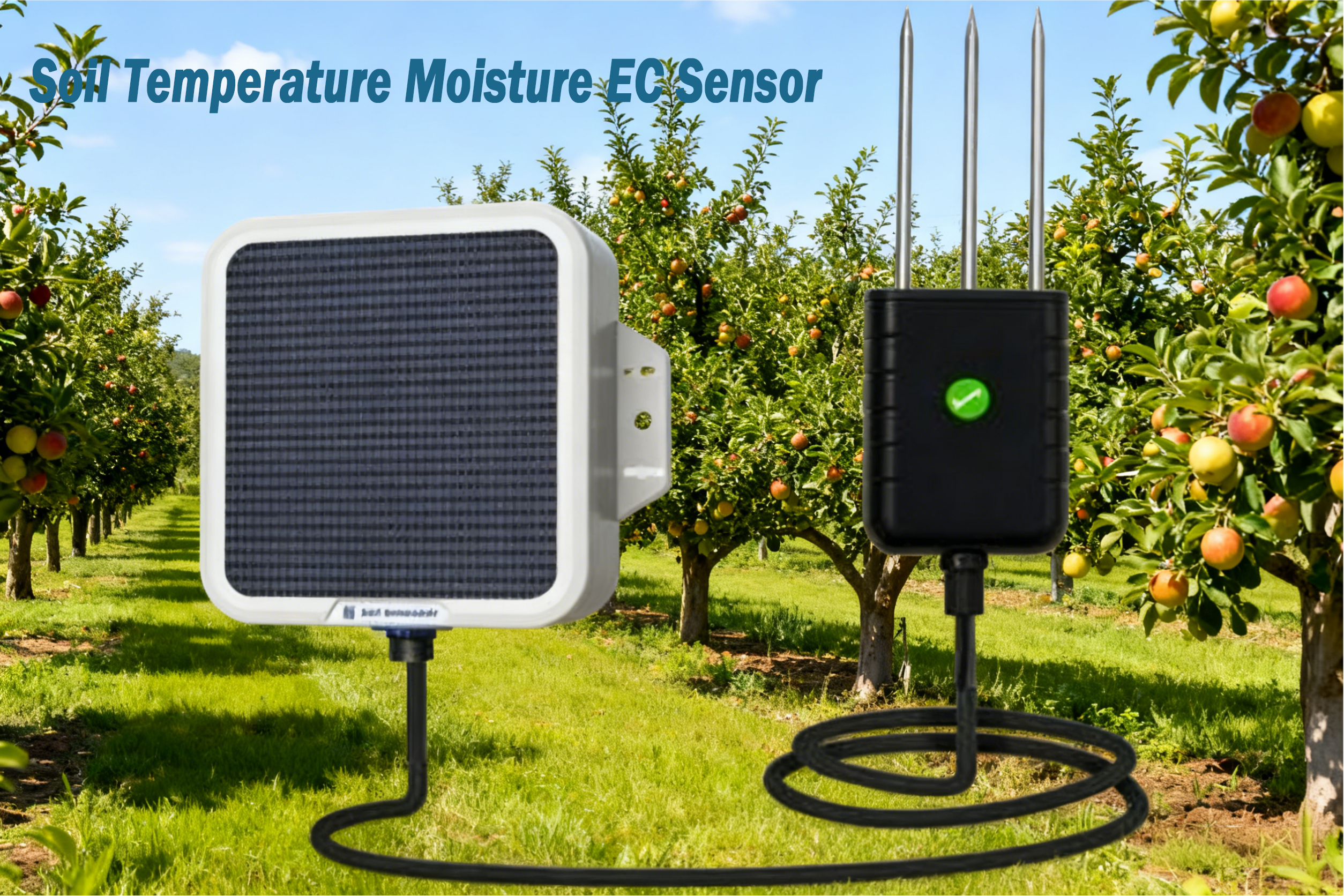
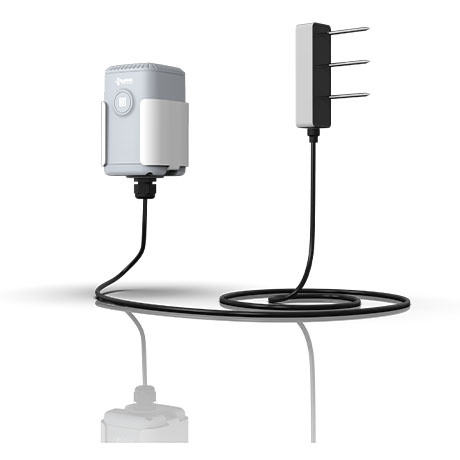
Soil moisture is a critical factor for plant growth, irrigation management and agricultural productivity. With countless soil moisture sensors available on the market, choosing a reliable, accurate and user-friendly device can be challenging. Ecowitt, a leader in smart monitoring solutions, offers the WH51 and WH51L (long-probe) wireless soil moisture sensors, designed to meet both indoor and outdoor monitoring needs.
This article integrates professional knowledge of soil moisture sensing technologies with detailed product information of Ecowitt sensors. It first explains the core principles of common sensing methods, analyzes their advantages and disadvantages, then focuses on the features, performance and application scenarios of Ecowitt WH51 and WH51L, providing a comprehensive guide for users to select and use soil moisture meters effectively.
2. Core Concepts: Understanding Soil Moisture Measurement
The term "soil moisture" often refers to two distinct parameters, and clarifying their differences is essential for choosing the right sensor:
2.1 Volumetric Water Content (VWC)
Volumetric Water Content (VWC) is the ratio of water volume to the total volume of soil, expressed as a percentage. It directly reflects the actual amount of water available for plants and is the most commonly measured parameter in practical agricultural and horticultural applications. All in-situ soil moisture sensors, including Ecowitt WH51 and WH51L, focus on measuring VWC.
VWC is an intuitive indicator for irrigation decisions. For example, most potted plants thrive when VWC is between 20% and 60%, while field crops may require different moisture levels at various growth stages. Accurate VWC measurement helps avoid over-irrigation or under-irrigation, optimizing water resource utilization.
2.2 Soil Water Potential
Soil water potential, also known as soil suction, refers to the energy state of water in the soil, determined by the adhesion of water molecules to soil particles. As soil moisture decreases, water molecules bind more tightly to soil particles, reducing their potential energy and availability to plants. This parameter is more relevant for predicting plant water stress and soil water movement, but it is less commonly used in routine monitoring compared to VWC.
For most home gardeners, farmers and general users, VWC measurement is sufficient for daily irrigation management, which is exactly what Ecowitt WH51 and WH51L sensors are designed to provide.
![03]()
soil moisture sensors
3. Common Soil Moisture Sensing Technologies: Principles & Comparisons
Common in-situ soil moisture sensing technologies include resistance-based and dielectric permittivity-based methods (TDR, FDR, capacitance). Each method has unique principles, performance characteristics and application scopes. Understanding their differences helps users better recognize the advantages of Ecowitt sensors.
3.1 Resistance-Based Sensors
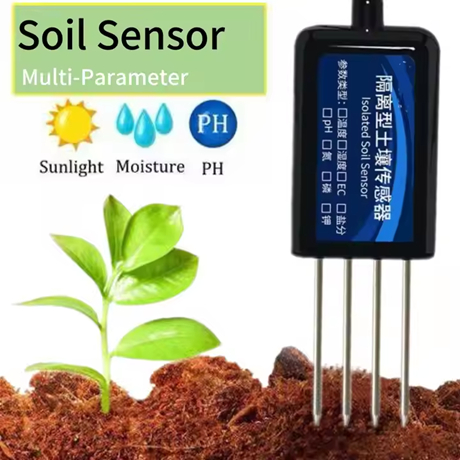
Resistance sensors operate by creating a voltage difference between two electrodes inserted into the soil, allowing a small current to flow through the soil. Since pure water is a poor conductor, the current is mainly carried by ions in the soil water. The core principle is that soil resistance decreases as moisture content increases, and the sensor outputs resistance or electrical conductivity (EC) values to reflect moisture levels.
However, this technology has significant limitations:
• Accuracy issues: It relies on the assumption that the number of ions in the soil remains constant. In reality, fertilization, irrigation and soil type changes can cause ion fluctuations, leading to large measurement errors. A modest change in soil salinity can alter the sensor calibration by an order of magnitude.
• Poor durability: Electrodes are prone to corrosion and degradation over time, further reducing measurement accuracy.
Due to these limitations, resistance sensors are only suitable for low-demand scenarios such as home gardening experiments, and cannot meet the requirements of precise monitoring.
3.2 Dielectric Permittivity-Based Sensors (TDR, FDR, Capacitance)
Dielectric permittivity-based sensors measure the charge-storing capacity of soil, which is a more reliable and accurate method than resistance-based sensing. Each material has a unique dielectric constant: air = 1, soil solids = 3–6, and water = 80. Since the volume of soil solids is relatively stable, changes in soil dielectric constant are mainly driven by changes in water and air content, enabling accurate VWC measurement.
There are three main types of dielectric permittivity-based sensors:
3.2.1 Time-Domain Reflectometry (TDR) Sensors
TDR sensors emit high-frequency electrical pulses along a transmission line (probe) inserted into the soil, and measure the travel time of pulses reflected back from the probe end. The travel time is inversely proportional to the soil dielectric constant, thus calculating VWC. TDR sensors have high accuracy (±2–3% with soil-specific calibration) and are insensitive to salinity in low to medium ranges. However, they are complex to install (requiring trench digging), consume large power and have high costs, making them more suitable for scientific research rather than general civilian use.
3.2.2 Frequency-Domain Reflectometry (FDR) Sensors
FDR sensors use soil as a capacitor in an electrical circuit and measure the maximum resonant frequency of the circuit. The resonant frequency decreases as the soil dielectric constant (and thus moisture content) increases. FDR sensors are easy to install, consume low power and have moderate costs, with performance comparable to TDR sensors. They are widely used in agricultural and horticultural monitoring.
3.2.3 Capacitance Sensors
Capacitance sensors treat soil as a component of a capacitor, measuring the soil capacitance and converting it to VWC via calibration curves. High-frequency capacitance sensors (≥50 MHz) can avoid polarizing salt ions in soil water, minimizing the impact of salinity on measurement accuracy. They have the advantages of small size, easy installation, low power consumption and low cost, making them the most popular choice for civilian smart monitoring devices, including Ecowitt WH51 and WH51L sensors.
4. Expert & User Reviews of Ecowitt Soil Moisture Sensors
Ecowitt WH51 and WH51L sensors have received positive feedback from users and reviewers on multiple platforms, verifying their performance and practical value:
• Reliable Quality & Accuracy: Reviewers on Amazon.com.be and other e-commerce platforms praise the sensors for their solid build quality, accurate measurement results and easy setup. Many users confirm that the sensors provide consistent data, helping them better understand soil moisture conditions.
• User-Friendly Smart Features: Users highly recognize the app monitoring and email alert functions. They mention that the system "removes the guesswork about when to water", especially useful for busy gardeners or those who travel frequently. The ability to view historical data graphs also helps track moisture changes over time and optimize irrigation strategies.
• Excellent Basic Calibration: Users on forums like WXforum.net confirm the reliability of the sensors' basic calibration: placing the sensor in the air shows 0% moisture, and immersing it in a cup of water shows 100%, indicating that the sensors have good initial accuracy and do not require complex calibration for general use.
• Gateway as a Key Accessory: Most reviewers suggest that the matching Wi-Fi gateway is a must-have accessory. It unlocks the full potential of the sensors, enabling remote monitoring, data logging and alert functions. Without the gateway, the sensors cannot realize their smart features, reducing their practical value.
5. How to Choose & Use Ecowitt Soil Moisture Sensors
5.1 Selection Guidelines
• Based on Monitoring Depth: Choose the WH51 for shallow soil monitoring (e.g., standard potted plants, small flower beds) and the WH51L for deep soil testing (e.g., deep pots, raised beds, field crops with deep roots). The 1-meter long probe of the WH51L can accurately measure moisture in deep soil layers, meeting the needs of deep-rooted plants.
• Based on Display Needs: If you need to view real-time data directly on the sensor (without opening the app or console), the WH51L with an LCD screen is a better choice. The WH51 is suitable for users who prefer centralized monitoring via a gateway or app.
• Based on Application Environment: Both models are suitable for indoor and outdoor use. For scenarios with frequent heavy rain or long-term immersion (e.g., low-lying gardens), the WH51L's IP68 waterproof probe provides more reliable protection. The WH51's IP66 rating is sufficient for general outdoor use.
5.2 Installation & Use Tips
• Avoid Air Gaps: When inserting the probe into the soil, ensure that the soil is tightly in contact with the probe. Air gaps can cause significant measurement errors. For hard soil, it is recommended to dig a small hole first, insert the probe, and then compact the surrounding soil.
• Proper Probe Depth: Insert the probe to an appropriate depth according to the plant's root zone. For most potted plants, inserting 5–10 cm deep is sufficient; for field crops, the WH51L's long probe can be inserted to 30–60 cm (adjustable based on root depth).
• Waterproof Protection: Ensure that the sensor's connection points and cables (if any) are properly sealed to avoid water ingress. When using the WH51L, pay attention to protecting the non-probe parts (with lower waterproof rating) from long-term immersion.
• Regular Maintenance: Clean the probe regularly to remove soil residues, corrosion or algae, which may affect measurement accuracy. Avoid hitting or bending the probe to prevent damage.
6. Conclusion
Reliable soil moisture monitoring is the foundation of scientific irrigation and efficient agricultural management. Among various sensing technologies, high-frequency capacitance sensors stand out for their accuracy, ease of use and cost-effectiveness, making them ideal for civilian smart monitoring.
When choosing between the two models, users should consider their monitoring depth, display needs and application environment. With proper installation and maintenance, Ecowitt soil moisture sensors can provide long-term, stable performance, becoming a valuable tool for plant care and irrigation management.