1. Introduction: The Core Role of IoT Soil Moisture Sensors
In modern agriculture and environmental management, soil moisture is a decisive factor affecting crop growth, resource utilization and ecological balance. IoT soil moisture sensors, as core devices of precision agriculture, realize real-time monitoring of soil moisture by integrating sensing technology and Internet of Things communication, and transmit data to the cloud platform for analysis. This not only solves the drawbacks of traditional manual monitoring such as inefficiency and poor timeliness, but also provides data support for smart decisions such as irrigation and fertilization, which is of great significance for improving yield, saving resources and promoting sustainable development.
However, the market is filled with various soil moisture sensing technologies, which often brings confusion to users when selecting products. It is particularly important to clarify the measurement objects of sensors, distinguish the performance differences between different technical routes, and grasp their application scenarios. This article will systematically sort out the relevant knowledge of IoT soil moisture sensors to help users establish a comprehensive understanding.
2. Core Concepts: Clarifying the Measurement Objects of Soil Moisture Sensors
The term "soil moisture sensor" is not specific enough, as it usually involves two different measurement objects: soil water content and soil water potential. Correctly distinguishing the two is the premise of selecting the right sensor.
2.1 Soil Water Content
Soil water content refers to the amount of water in the soil, which is usually expressed by weight percentage or volume percentage. Among them, volumetric water content (VWC) is the most commonly used index in in-situ monitoring, that is, the ratio of the volume of water in the soil to the total volume of the soil. For example, 25% VWC means that there is 0.25 cubic inches of water in every cubic inch of soil. This index directly reflects the quantity of water in the soil and is suitable for scenarios that need to quantitatively assess the water status of the soil.
2.2 Soil Water Potential
Soil water potential, also known as soil suction, refers to the energy state of water in the soil, which mainly depends on the adhesion of water molecules to soil particles. The boundary layer of water around soil particles becomes thinner as the soil dries, and the remaining water molecules are more tightly bound to the soil particles, resulting in lower potential energy and reduced availability to plants. This index is more suitable for predicting plant water availability and soil water movement, and is often used in scenarios such as judging crop water stress.
It should be noted that these two indexes are often confused in practical applications. Users need to determine the appropriate measurement object according to their own needs: if they focus on the quantitative water content of the soil, they should choose a soil water content sensor; if they focus on the water availability for plants, they should choose a soil water potential sensor.
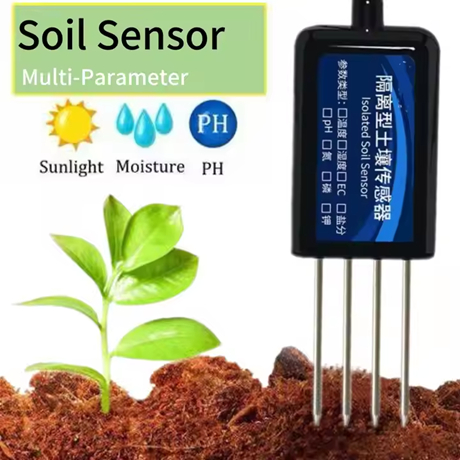
![Soil Sensor]()
iot soil sensors
3. Working Principles of IoT Soil Moisture Sensors
The working principle of IoT soil moisture sensors is mainly divided into two parts: sensing principle (collecting soil moisture information) and IoT transmission principle (transmitting data). Among them, the sensing principle is the core of determining the measurement accuracy, and the common technical routes include resistance type and dielectric permittivity type (TDR, FDR, capacitance type).
3.1 Sensing Principles of Common Sensors
3.1.1 Resistance Sensors
Resistance sensors realize moisture measurement by creating a voltage difference between two electrodes inserted into the soil. Since pure water is a poor conductor, the current between electrodes is mainly carried by ions in the soil water. In theory, the higher the soil water content, the more ions that can carry current, and the lower the soil resistance. However, this principle relies on a critical assumption: the ion concentration in the soil remains constant. In practical applications, factors such as soil type, fertilizer application and irrigation water quality will cause changes in soil ion concentration, which will lead to large deviations in sensor readings even if the water content remains unchanged.
3.1.2 Dielectric Permittivity Sensors (TDR, FDR, Capacitance)
Dielectric permittivity sensors measure the charge storage capacity of the soil (i.e., dielectric constant) to infer water content, which is a more reliable technical route than the resistance type. Each component in the soil has a unique dielectric constant: air is 1, soil solids are about 3-6, and water is as high as 80. Since the volume of soil solids is relatively stable in the short term, the change of soil dielectric constant is mainly determined by the relative content of water and air, which can accurately reflect the volumetric water content of the soil.
According to different measurement methods, dielectric permittivity sensors are divided into three categories:
• TDR (Time-Domain Reflectometry) Sensors: By emitting electrical wave signals and measuring the travel time of reflected waves along the transmission line, the dielectric constant of the soil is calculated, and then the volumetric water content is obtained. The TDR signal contains a variety of frequency components, which can effectively reduce the interference of soil salinity on the measurement results.
• FDR (Frequency-Domain Reflectometry) Sensors: Treat the soil as a component of the capacitor in the circuit, and measure the resonant frequency of the circuit. The resonant frequency of the circuit will change with the dielectric constant of the soil, and the volumetric water content can be obtained through calibration.
• Capacitance Sensors: Directly measure the capacitance value of the soil (i.e., the ability to store charge) and convert it into volumetric water content through a calibration curve. High-frequency capacitance sensors can avoid the polarization of ions in the soil water, further reducing the impact of salinity.
3.2 IoT Transmission Principle
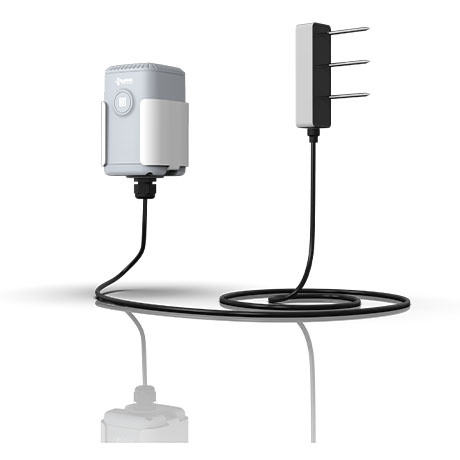
The IoT soil moisture sensor realizes the intelligent transmission and management of data through the following links:
1. Data Collection: The sensor probe embedded in the soil continuously collects soil moisture data, and some integrated sensors can also synchronously collect parameters such as soil temperature, electrical conductivity (EC) and pH value.
2. Wireless Transmission: The collected data is transmitted to the cloud platform or local central controller through low-power wide-area network technologies such as LoRaWAN and NB-IoT. This wireless transmission method avoids the trouble of wiring and is suitable for large-area and multi-point monitoring scenarios.
3. Cloud Analysis: The cloud platform uses data analysis and machine learning algorithms to process the collected data, identify data trends, and generate actionable insights. For example, it can judge whether irrigation is needed according to the moisture threshold and crop growth stage.
4. Decision Execution: Users can view real-time data and early warning information through terminals such as mobile phones and computers, and can also link with automatic irrigation systems to realize automatic irrigation when the moisture content is lower than the set threshold, realizing unmanned management.
4. Grade Differentiation: Research-Grade vs Non-Research-Grade Sensors
Not all soil moisture sensors can meet the requirements of scientific research or high-precision monitoring. The key difference lies in measurement accuracy, stability and anti-interference ability, which is directly determined by the technical route and product design.
4.1 Why Resistance Sensors Are Non-Research-Grade
Resistance sensors have the advantages of low price, simple structure and low power consumption, and are suitable for scenarios such as home gardening and science popularization experiments that only need to judge the "wet-dry" state of the soil. However, they cannot meet the requirements of research-grade applications for the following reasons:
• Poor Accuracy: The calibration curve of the resistance sensor is highly dependent on the soil type and ion concentration. Even a small change in soil electrical conductivity can lead to a tenfold shift in the calibration curve, making quantitative measurement impossible.
• Poor Stability: The sensor electrodes are prone to aging and corrosion in the soil, resulting in gradual degradation of performance and inability to maintain long-term stable measurement.
• Strong Interference: It is extremely sensitive to soil salinity, fertilizer residues and other factors, and the measurement results are easily distorted in agricultural production scenarios with frequent fertilization and irrigation.
4.2 Characteristics of Research-Grade Sensors
Research-grade soil moisture sensors are mainly based on dielectric permittivity technology, and have the following characteristics to ensure measurement quality:
• High Measurement Frequency: Sensors working at 50 MHz or higher can effectively avoid the polarization of ions in the soil, reduce the interference of salinity, and ensure measurement accuracy. Low-frequency dielectric sensors (such as some cheap kHz-level products) are easily affected by salinity and are close to resistance sensors in performance.
• High Calibration Accuracy: After soil-specific calibration, the measurement error can be controlled within 2-3%, which can meet the requirements of scientific research data publication. Factors such as soil bulk density and clay content have little impact on the calibration curve, and the error can be further reduced through compensation algorithms.
• Strong Stability: The product has a robust structure and corrosion-resistant materials, which can maintain stable performance in harsh soil environments for a long time, and is suitable for long-term field monitoring.
• Good Anti-Interference Ability: Advanced circuit design can reduce the impact of external factors such as temperature and electromagnetic radiation on the measurement results, ensuring the reliability of data.
5. Application Values of IoT Soil Moisture Sensors
IoT soil moisture sensors, with their advantages of real-time monitoring, remote management and intelligent analysis, have been widely used in agriculture, environmental protection, urban agriculture and other fields, and have shown significant application value.
5.1 Smart Irrigation
Smart irrigation is the most important application scenario of IoT soil moisture sensors. By monitoring the real-time moisture content of the soil root zone, farmers can grasp the water demand of crops accurately and formulate personalized irrigation schedules. This not only avoids water waste caused by over-irrigation and yield reduction caused by under-irrigation, but also improves the utilization rate of water resources. The specific implementation logic is: calculate the soil water deficit according to the field capacity (the maximum water content that the soil can retain after sufficient irrigation) and the current moisture content, and trigger irrigation when the deficit reaches the management allowable depletion (MAD) suitable for the crop growth stage. For example, most crops begin to experience water stress when the water deficit reaches 30-50% of the available water capacity, and irrigation should be carried out at this time.
In addition, the IoT soil moisture sensor can also be linked with weather forecast data. For example, if rain is predicted in the short term, the irrigation plan can be adjusted appropriately, further improving the rationality of water use. This precise irrigation method can not only reduce irrigation costs by 20-30%, but also improve crop quality and yield by 10-15%.
5.2 Environmental Monitoring
In ecological environment monitoring, IoT soil moisture sensors are important tools for assessing drought conditions and managing land resources. By setting up monitoring points in different ecosystems (such as grasslands, forests and wetlands), the dynamic changes of soil moisture can be continuously tracked, which provides data support for evaluating the impact of climate change on ecosystems, formulating drought prevention and mitigation measures and protecting biodiversity. For example, in arid and semi-arid regions, monitoring soil moisture changes can help early warn of desertification risks and guide ecological restoration work.
5.3 Urban Agriculture
In urban agriculture scenarios such as rooftop gardens, community farms and vertical greening, water resources are often limited, and the management of soil moisture is particularly important. IoT soil moisture sensors can help urban farmers monitor the moisture status of multiple planting areas remotely, avoiding the problem of plant death caused by forgetting to water or over-watering due to busy work. At the same time, combined with the characteristics of urban soil (such as poor soil structure and high salinity), the sensor can also monitor parameters such as soil EC value synchronously, providing a basis for improving soil quality.
5.4 Scientific Research and Education
In scientific research, IoT soil moisture sensors provide a convenient tool for large-scale and long-term soil moisture data collection. Researchers can use the sensor network to study the relationship between soil moisture, plant growth and ecosystem dynamics, and promote the development of sustainable agricultural and ecological management technologies. In the field of education, the sensor can help students intuitively understand the interaction between soil and water, and cultivate their awareness of scientific research and environmental protection.
5.5 Decision Support Systems
IoT soil moisture sensors provide core data input for agricultural decision support systems. By integrating soil moisture data with weather forecast, crop growth model, soil nutrient status and other parameters, the system can accurately predict the water demand of crops, optimize irrigation and fertilization schemes, and maximize agricultural productivity. For example, in large-scale farm management, the decision support system based on sensor data can realize the refined management of different plots, improving the overall operation efficiency of the farm.
![Applications and Value of IoT Soil Moisture Sensor(1)]()
Application Values of IoT Soil Moisture Sensors
6. Advantages of IoT-Integrated Soil Moisture Sensing Systems
Compared with traditional independent sensors, the IoT-integrated soil moisture sensing system has significant advantages in data management, operation efficiency and user experience, which specifically include:
• Remote Data Management: Users can access real-time monitoring data through browsers and mobile apps anytime and anywhere, and can download data in formats compatible with Excel, R, MatLab and other software for in-depth analysis. There is no need for manual on-site data collection, which greatly reduces labor costs.
• Intelligent Early Warning: The cloud platform can set moisture thresholds according to different crops and growth stages. When the measured value exceeds the threshold, it will send early warning information to the user through SMS, email and other ways, helping users deal with abnormal situations in a timely manner.
• Multi-Point Unified Management: For large-area monitoring scenarios, multiple sensors can be connected to the same cloud platform to realize unified management and data comparison of multiple monitoring points. The platform can automatically generate data charts, making it easy for users to grasp the spatial variation of soil moisture.
• Low Power and Long Life: Most IoT soil moisture sensors adopt low-power design and are equipped with long-life batteries, which can work continuously for several years without frequent battery replacement. The sleep mode can further save power and adapt to long-term unattended monitoring.
• Easy Integration and Expansion: Through APIs, the sensor system can be integrated with existing farm management software, irrigation control systems and other platforms to realize the interconnection of data and equipment. At the same time, the system can be flexibly expanded according to the monitoring needs, adding sensors for measuring nutrients (NPK), soil oxygen and other parameters.
• Permanent Data Storage: The cloud platform provides permanent data storage services, and the data can be shared with multiple stakeholders after authorization. Even if the project team personnel change, the data can be kept intact, ensuring the continuity of the project.
7. Key Points for Selection and Installation of IoT Soil Moisture Sensors
7.1 Selection Criteria
When selecting IoT soil moisture sensors, users should make choices based on their own application scenarios, accuracy requirements and budget, and the key selection criteria are as follows:
Sensor Type | Advantages | Disadvantages | Suitable Scenarios |
Resistance Type IoT Sensors | Low price, low power consumption, simple operation | Poor accuracy, sensitive to salinity, poor stability | Home gardening, science popularization experiments, scenarios with low accuracy requirements |
Capacitance Type IoT Sensors (High Frequency) | High accuracy, easy installation, low power consumption, cost-effective | Slightly sensitive to high salinity (>8 dS/m) | Precision agriculture, field monitoring, smart irrigation systems |
TDR Type IoT Sensors | High accuracy, strong anti-interference ability, recognized by the academic community | High price, complex installation, high power consumption | Scientific research projects, high-precision monitoring scenarios |
Integrated IoT Sensors (Moisture + Temperature + EC + pH) | Comprehensive data, one-time installation, high integration | Higher price than single-function sensors | Comprehensive soil health monitoring, high-end precision agriculture |
7.2 Installation Key Points
Proper installation is the guarantee of measurement accuracy. The following key points should be noted during installation:
5. Site Selection: Choose representative plots, avoiding high-lying areas, depressions, slopes and areas close to irrigation pipes. For crop monitoring, the sensor should be installed between crop rows, away from the main root system of crops to avoid damage by farming activities.
6. Installation Depth: Determine the installation depth according to the crop root zone. Generally, sensors should be installed in pairs at 1/3 and 2/3 of the root zone depth to monitor the moisture status of different soil layers. For example, the root zone depth of most field crops is 30-60 cm, and sensors can be installed at 15 cm and 45 cm.
7. Avoid Air Gaps: When drilling holes for installation, the diameter of the hole should match the sensor probe. After inserting the sensor, the gap around the probe should be compacted with original soil to ensure close contact between the sensor and the soil. Do not use soil slurry to fill the gap, as it will change the original soil structure and affect the measurement results.
8. Protection Measures: Mark the installation position to avoid damage by agricultural machinery. For sensors used in outdoor environments, the junction box and wireless module should be protected from water and sun to extend the service life.
9. Calibration Before Use: Although the sensor has been factory-calibrated, it is recommended to perform on-site calibration according to the local soil type before formal use to further improve measurement accuracy.
8. Conclusion
IoT soil moisture sensors, with their advanced sensing technology and intelligent transmission mode, have broken through the limitations of traditional soil moisture monitoring methods and become an important support for modern precision agriculture and ecological environment management. By clarifying the core concepts such as measurement objects and technical principles, distinguishing the differences between research-grade and non-research-grade sensors, and grasping the key points of selection and installation, users can give full play to the application value of the sensors.
In the future, with the continuous development of IoT technology and data analysis algorithms, IoT soil moisture sensors will show broader application prospects: on the one hand, the measurement accuracy and anti-interference ability will be further improved, and the application scenarios will be expanded to more complex soil and climate environments; on the other hand, the integration with technologies such as unmanned aerial vehicles and big data will be deeper, promoting the transformation of agriculture to a more intelligent, efficient and sustainable direction. For users, mastering the relevant knowledge of IoT soil moisture sensors is the key to seizing the opportunities of smart agriculture development and realizing the rational utilization of resources and the improvement of production efficiency.