◀◀Types -LoRaWAN Wireless Tipping Bucket Rain Gauge ▶▶
Rain Gauge SN200-601SS2
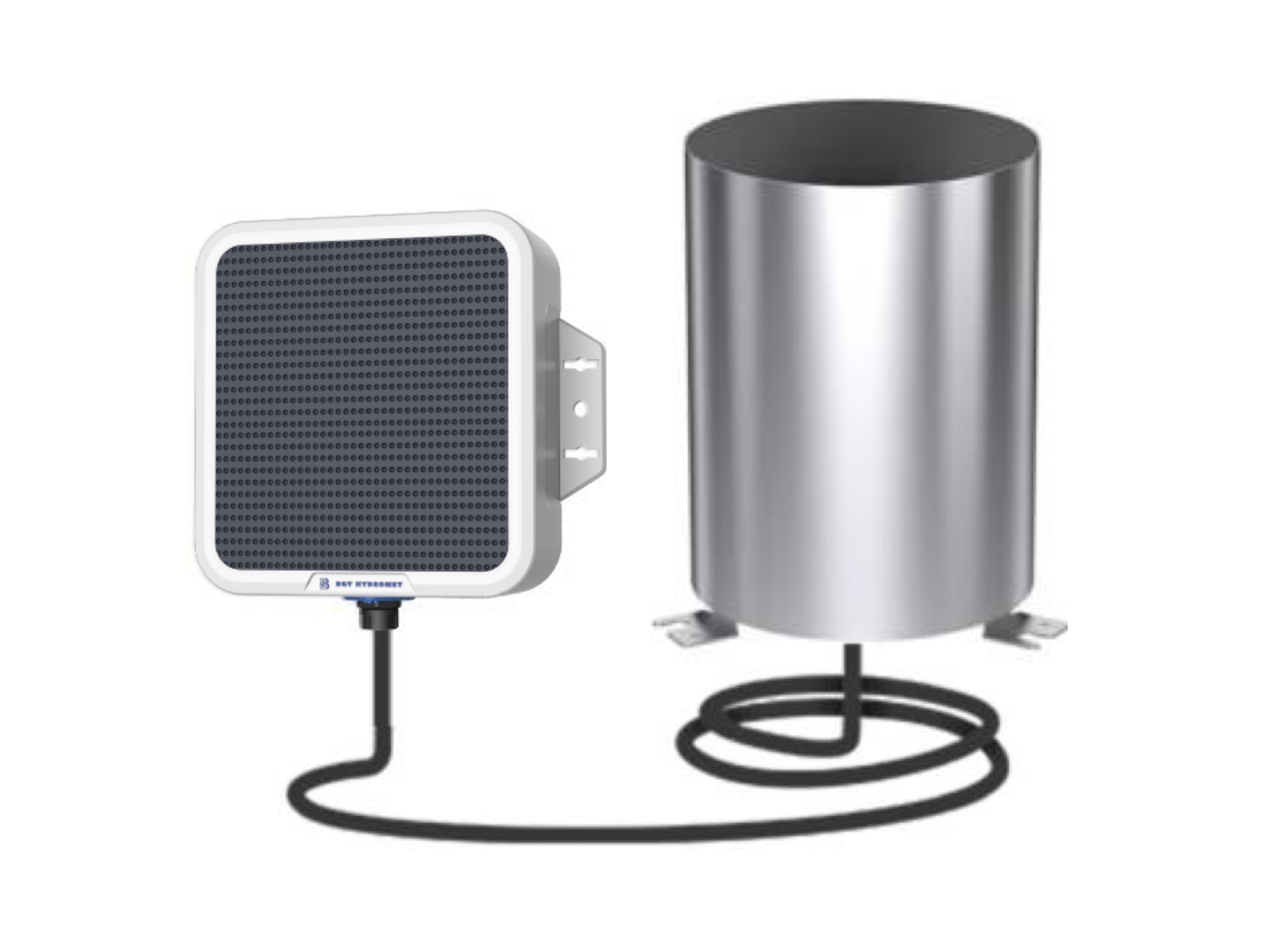
The product is independently powered by a battery and works in ultra-low power mode, achieving a battery life of 3 years. The sensor body is made of imported high-quality transparent materials, with good water transfer performance, easy cleaning and maintenance, and can be used outdoors for a long time.
Key Features
■ Supports LoRaWAN® Class A protocol
■ High reliability and long-term stability
■ Ultra-long-distance transmission
■ Battery life ≥ 3 years
■ Quick installation and deployment
■ IP66 protection level, supports outdoor use
Application scenarios
■ Smart agriculture and meteorology
■ Smart buildings and industrial control
■ Environmental monitoring
■ Flash flood disaster monitoring
Technical Parameter
| Rainfall |
Measuring range | 0~8mm/min |
Accuracy | ±≤4% (≤240mm/hr) |
| Resolution | 0.2mm/0.5mm |
| General Parameter |
| Supply voltage | Built-in Battery, 2.5V~3.6V |
| Battery capacity | 10500mAh |
| Working temp. | -40~85℃ |
| Working humidity | 0 ~100 %RH (non-condensing) |
| Communication | LoRaWAN 1.0.3 Class A |
| LoRa frequency band | KR920/US915/EU868/AS923/U915/IN86 |
| Frequency range | Band 1 (HF): 862~1020 Mhz |
| Lora transmission frequency | Max +22 dBm |
| LoRa Receiver Sensitivity | down to -139 dBm |
| Sleep mode | 5uA @ 3.3v |
| LoRa transmit mode | 125mA @ 20dBm, 82mA @ 14dBm |
Rain Gauge SN200-ABS25
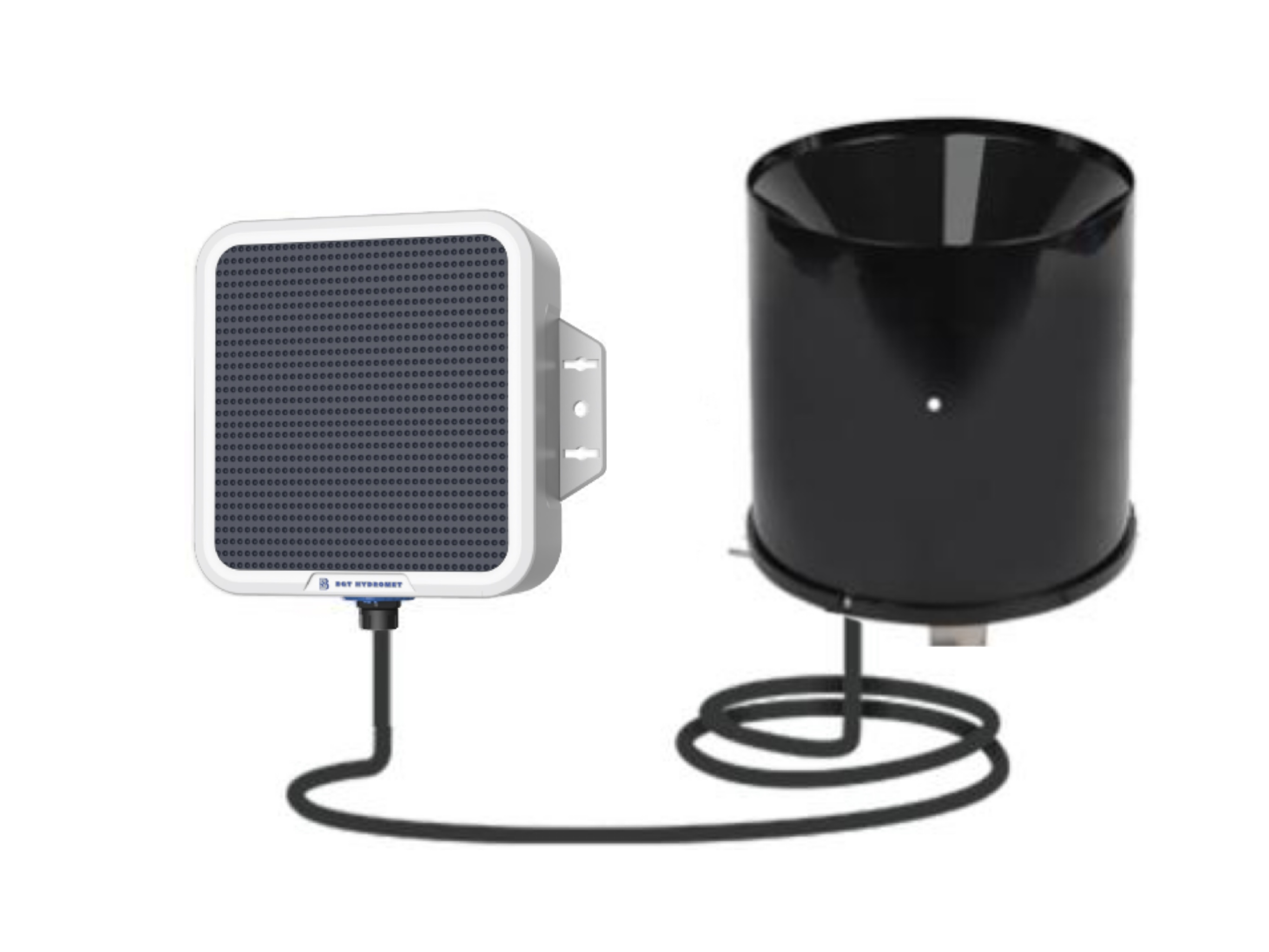
Wireless tipping bucket rain gauge is a hydrological and meteorological instrument used to measure natural rainfall, and at the same time convert rainfall into digital information output in the form of a switch, to meet the needs of information transmission, processing, recording and display. It is a precision rain gauge, and the tipping bucket and the water outlet of the water diversion funnel must be regularly maintained and cleaned during use.
Key Features
■ Supports LoRaWAN® Class A protocol
■ High reliability and long-term stability
■ Ultra-long-distance transmission
■ Battery life ≥ 3 years
■ Quick installation and deployment
■ IP66 protection level, supports outdoor use
Application scenarios
■ Smart agriculture and meteorology
■ Smart buildings and industrial control
■ Environmental monitoring
■ Flash flood disaster monitoring
Technical Parameter
| Rainfall |
| Measuring range | 0mm~4mm/min |
| Accuracy | ±≤4% (≤240mm/hr) |
| Resolution | 0.2mm/0.5mm |
| General Parameter |
| Supply voltage | Built-in Battery, 2.5V~3.6V |
| Battery capacity | 10500mAh |
| Working temp. | -40~85℃ |
| Working humidity | 0 ~100 %RH (non-condensing) |
| Communication | LoRaWAN 1.0.3 Class A |
| LoRa frequency band | KR920/US915/EU868/AS923/ AU915/IN865 |
| Frequency range | Band 1 (HF): 862~1020 Mhz |
| Lora transmission frequency | Max +22 dBm |
| LoRa Receiver Sensitivity | down to -139 dBm |
| Sleep mode | 5uA @ 3.3v |
| LoRa transmit mode | 125mA @ 20dBm, 82mA @ 14dBm |
◀◀Working principle -LoRaWAN Wireless Tipping Bucket Rain Gauge ▶▶
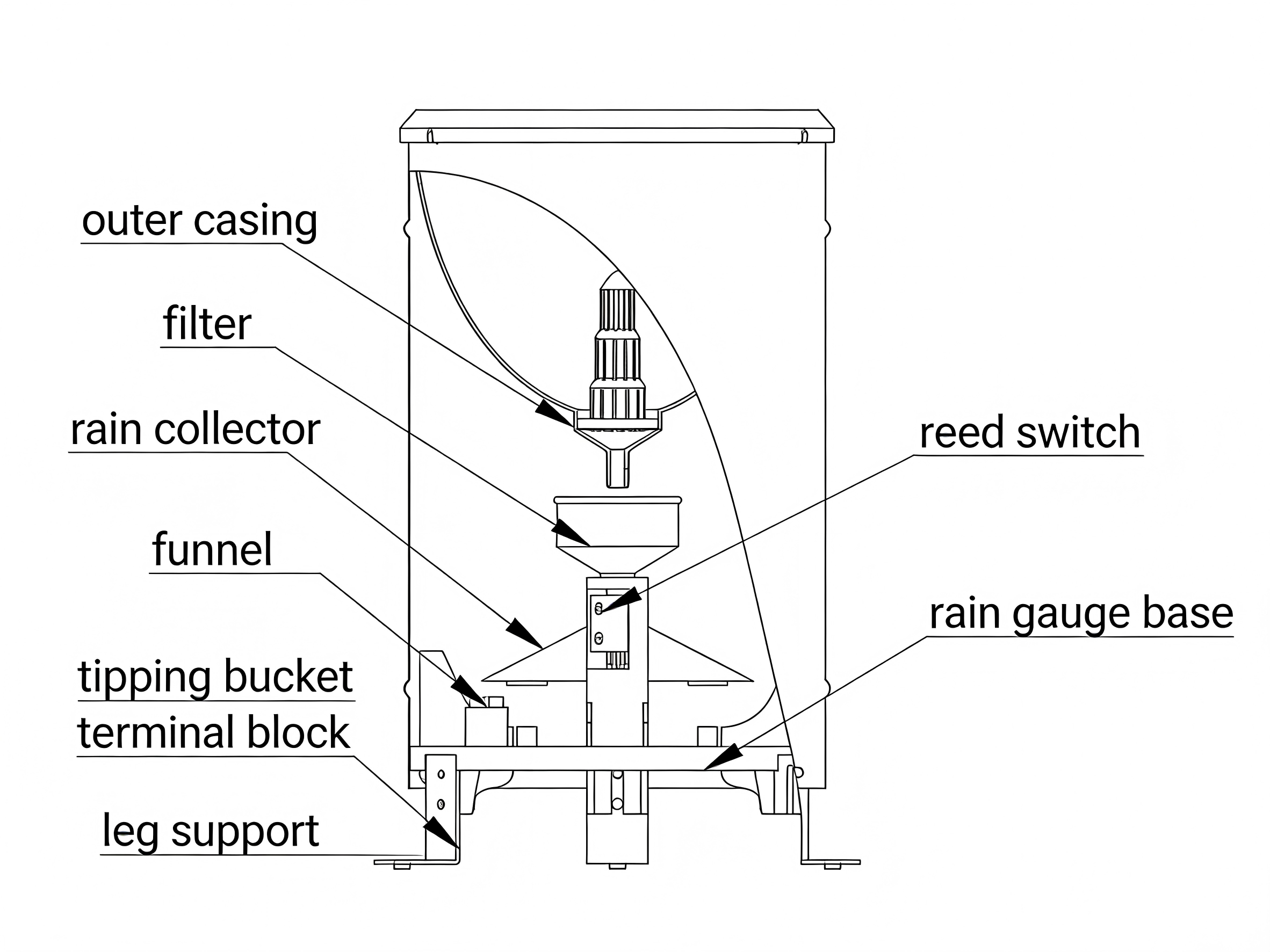
Structure Diagram
The LoRaWAN wireless tipping bucket rain gauge integrates mechanical tipping technology with low-power LoRaWAN communication to realize accurate, remote rainfall monitoring. Its core mechanism consists of a collecting funnel, a balanced tipping bucket assembly, a magnetic sensing switch, and a LoRaWAN transceiver module.
When it rains, the funnel collects rainfall and guides it into one of the two symmetric bucket chambers. Each chamber is calibrated to hold a fixed volume of water, typically corresponding to 0.1mm or 0.2mm of rainfall. Once the water in the filled chamber reaches the preset volume, gravity causes the bucket to tip, emptying the water and switching the other chamber to the collection position.
During the tipping motion, a magnet attached to the bucket triggers a reed switch, generating one electrical pulse per tip. The device counts these pulses and aggregates data at regular intervals (usually 10 minutes). Equipped with AES-128 encryption, the LoRaWAN module transmits the pulse count, interval duration, and accumulated rainfall wirelessly over long distances with minimal power consumption. Users can retrieve real-time data via a cloud platform or private infrastructure, enabling reliable precipitation monitoring for meteorology, hydrology, and agriculture.
◀◀Functions -LoRaWAN Wireless Tipping Bucket Rain Gauge ▶▶
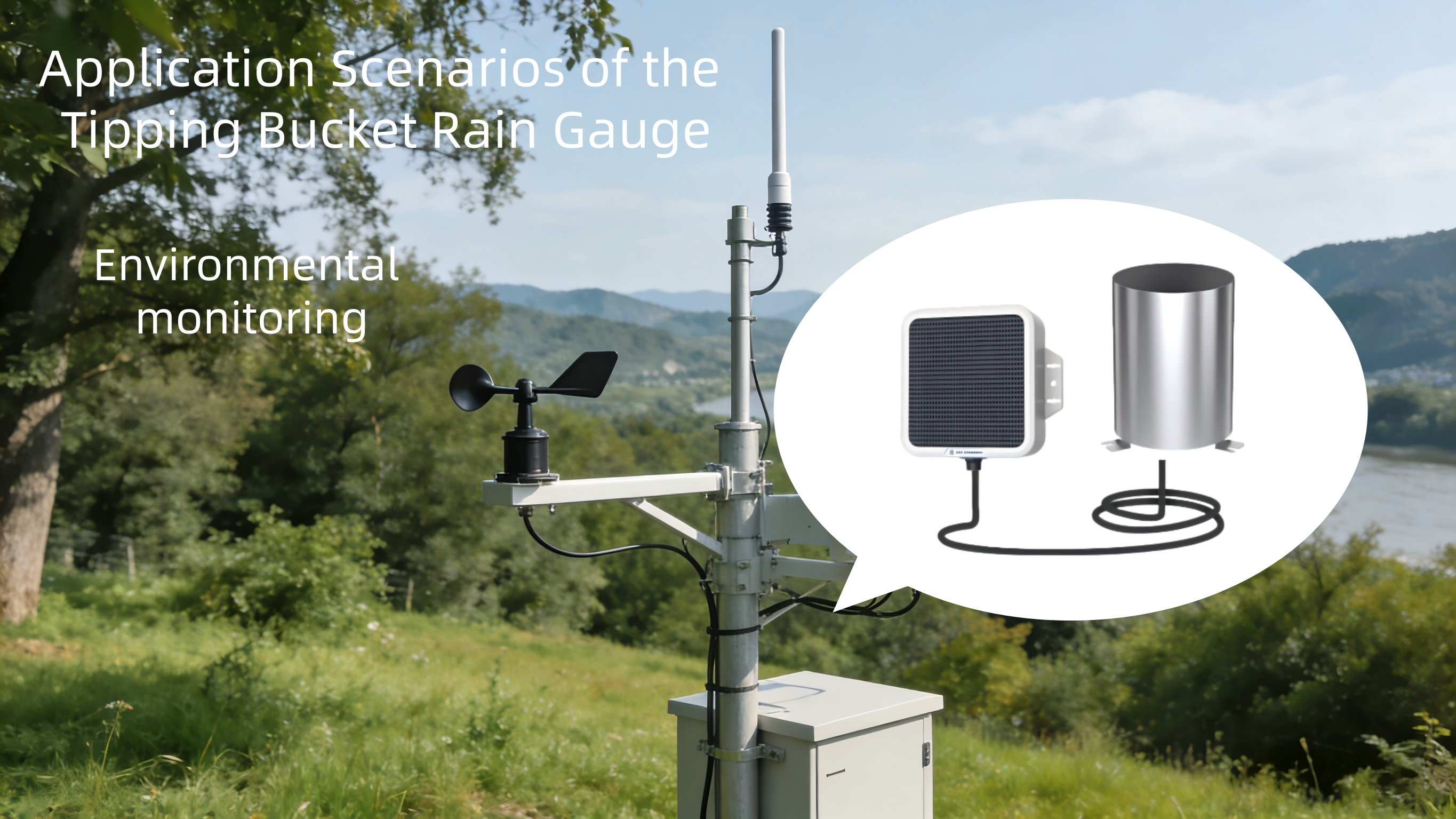
1. The tipping bucket rain sensor is used to measure natural rainfall, and convert rainfall into digital information output in the form of switch signals to meet the needs of information transmission, processing, recording and display.
2. The tipping bucket rain sensor is suitable for meteorological stations, hydrological stations, agriculture, forestry, national defense and other relevant departments to remotely measure liquid precipitation amount, precipitation intensity and the start and end time of precipitation.
3. It is used as a precipitation measuring sensor in hydrological automatic telemetry systems and automatic field telemetry stations for flood control, water supply scheduling and hydrological management of power station reservoirs.
◀◀Notes on Use -LoRaWAN Wireless Tipping Bucket Rain Gauge ▶▶
1. Regularly clean the rain inlet with a special cleaning pen for rain sensors to prevent blockage by debris.
2. When the instrument is placed indoors or used outdoors on confirmed rainless days, cover the inlet with the cylinder lid to prevent dust from entering the rain collector.
3. Frequently check the axial working clearance of the support shaft of the tipping bucket assembly; an excessively large or small clearance will affect its normal operation.

 English
 العربية
 Français
 Русский
 Español
 Português
 Deutsch
 italiano
 日本語
 한국어
 Nederlands
 Tiếng Việt
 ไทย
 Polski
 Türkçe
 Bahasa Melayu
 ဗမာစာ
 தமிழ்
 Filipino
 Bahasa Indonesia
 magyar
 Română
 Čeština
 Монгол
 қазақ
 Српски
 हिन्दी
 فارسی
 Slovenčina
 Norsk
 Svenska
 українська
 Ελληνικά
 Suomi
 עברית
 Dansk
 اردو
 বাংলা
 Afrikaans
 Gaeilge
 Eesti keel
 Māori
 नेपाली
 Oʻzbekcha
 Azərbaycan dili
 Беларуская мова
 Български
 Kurdî
 Кыргызча
 Lietuvių
 Türkmençe


