1. Introduction: The Critical Role of Soil Fertility Monitoring in Smart Agriculture
Soil fertility, the foundation of crop growth and agricultural productivity, is determined by a combination of nutrient content, physical properties, and chemical balance. Traditional soil fertility monitoring relies on time-consuming laboratory tests, which cannot meet the real-time, dynamic needs of modern farming. With the development of IoT (Internet of Things) technology, soil fertility sensors integrated with smart systems have become a core component of precision agriculture, enabling real-time collection, analysis, and application of soil data.
Soil fertility sensors, especially those combined with IoT, break through the limitations of traditional monitoring methods. They can simultaneously measure multiple key indicators such as nitrogen (N), phosphorus (P), potassium (K), moisture, temperature, electrical conductivity (EC), and pH, providing a holistic view of soil health. The integration of IoT further realizes remote data transmission, centralized management, and trend analysis, allowing farmers and researchers to make timely, accurate decisions on irrigation, fertilization, and land management. This not only improves crop yields and quality but also reduces resource waste and environmental pollution, promoting the sustainable development of agriculture.
2. Core Measurement Parameters of Soil Fertility Sensors
A high-performance soil fertility sensor can comprehensively monitor physical, chemical, and nutrient indicators of the soil. These parameters are interrelated and collectively determine soil fertility levels. The core measurement parameters are as follows:
2.1 Essential Nutrients: NPK (Nitrogen, Phosphorus, Potassium)
Nitrogen (N), phosphorus (P), and potassium (K) are the three primary macronutrients essential for crop growth, known as NPK. Nitrogen is critical for vegetative growth, affecting leaf development and chlorophyll synthesis. Phosphorus promotes flowering, fruiting, and root system development, enhancing crop resistance to stress. Potassium improves crop quality, strengthens stalks, and increases tolerance to drought, pests, and diseases. Soil fertility sensors monitor NPK levels to identify nutrient deficiencies or excesses, providing a scientific basis for precise fertilization.
2.2 Soil Moisture (Volumetric Water Content, VWC)
Soil moisture, usually expressed as volumetric water content (VWC), refers to the percentage of water volume in the total soil volume. It is a key factor affecting nutrient availability and crop water absorption—water acts as a carrier for soluble nutrients, enabling their uptake by plant roots. Insufficient moisture leads to nutrient starvation, while excess moisture causes root hypoxia and nutrient leaching. Soil fertility sensors measure VWC to optimize irrigation schedules, ensuring that crops receive adequate water and nutrients simultaneously.
It is important to distinguish soil moisture (water content) from soil water potential (soil suction), which reflects the energy state of water in the soil and the difficulty of plant water absorption. While some specialized sensors measure water potential, most soil fertility sensors focus on VWC for practical agricultural applications.
2.3 Soil Temperature
Soil temperature directly influences root growth, microbial activity, and nutrient mineralization (especially nitrogen). Low temperatures slow down seed germination and nutrient conversion, while excessively high temperatures inhibit root development and microbial activity. Soil fertility sensors monitor temperature at different depths (adapted to crop root structures) to guide planting time, irrigation, and fertilization timing. For surface soil temperature measurement, some sensors use infrared (IR) technology, while buried probes provide more accurate data for subsurface conditions.
2.4 Electrical Conductivity (EC)
Soil electrical conductivity (EC) reflects the content of soluble salts in the soil. High EC levels indicate saline soil, which causes osmotic stress to crops, limiting water and nutrient absorption and even leading to wilting. EC measurements also indirectly reflect soil nutrient richness—higher EC values often correspond to higher nutrient concentrations (though excessive salts are harmful). Soil fertility sensors integrate EC monitoring to help assess soil salinity and nutrient status, guiding the selection of salt-tolerant crops and rational fertilizer use.
2.5 Soil pH
Soil pH (acidity or alkalinity) determines the availability of nutrients. Most crops thrive in neutral to slightly acidic soils (pH 6.0–7.5). In acidic soils, phosphorus, calcium, and magnesium become less available; in alkaline soils, iron, zinc, and manganese form insoluble compounds, making them inaccessible to plants. Soil fertility sensors measure pH to guide soil improvement measures, such as adding lime to acidic soils or gypsum to alkaline soils, ensuring optimal nutrient availability.
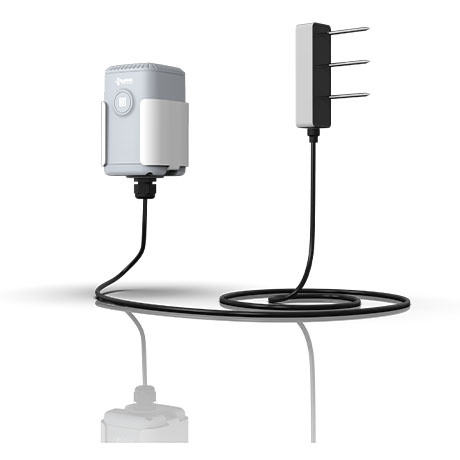
![Soil Integrated Sensor]()
3. Working Principles of Soil Fertility Sensors
Soil fertility sensors integrate multiple sensing technologies to measure different parameters simultaneously. The working principles of core sensors (moisture, EC, NPK, pH) are as follows:
3.1 Moisture & EC Measurement: Resistance vs. Dielectric Permittivity Technology
Two main technical routes are used for soil moisture and EC measurement: resistance technology and dielectric permittivity technology (including TDR, FDR, and capacitance). Their performance and applicability vary significantly:
3.1.1 Resistance Technology
Resistance-based sensors measure moisture by creating a voltage difference between two electrodes, allowing a small current to flow through the soil. The current is carried by ions in soil water, so resistance decreases as moisture increases. However, this technology relies on the assumption that soil ion concentration is constant. In practice, fertilization, irrigation, and soil type changes cause ion concentration fluctuations, leading to large measurement errors. EC measurement via resistance technology is similarly affected by ion variability.
Due to low accuracy, resistance sensors are only suitable for low-demand scenarios (e.g., home gardening) and cannot meet the requirements of precision agriculture or scientific research. Their advantages include low cost, simple integration, and low power consumption.
3.1.2 Dielectric Permittivity Technology (TDR, FDR, Capacitance)
Dielectric permittivity technology is a more reliable method for moisture measurement, used in most high-performance soil fertility sensors. Each material has a unique dielectric constant (ability to store electrical charge): air = 1, soil solids = 3–6, and water = 80. Since the volume of soil solids is stable in the short term, changes in soil dielectric constant are primarily determined by the relative content of water and air, enabling accurate VWC calculation.
Three common types of dielectric permittivity sensors:
• Capacitance Sensors: Treat the soil as part of a capacitor in a circuit. The sensor measures the soil’s capacitance, which is converted to VWC via a calibration curve. High-frequency capacitance sensors (≥50 MHz) avoid ion polarization in soil water, reducing EC interference and improving accuracy.
• TDR (Time-Domain Reflectometry) Sensors: Emit electrical wave signals and measure the travel time of reflected waves along a transmission line. The travel time is related to the soil’s dielectric constant, which is then converted to VWC. TDR signals contain multiple frequency components, providing strong resistance to soil salinity interference.
• FDR (Frequency-Domain Reflectometry) Sensors: Use the soil as a capacitor to measure the circuit’s maximum resonant frequency. Resonant frequency changes with the soil’s dielectric constant, and VWC is derived from this relationship. FDR sensors are easy to install and consume less power, making them suitable for long-term field monitoring.
The accuracy of dielectric permittivity sensors is affected by soil bulk density, clay content, and sensor-soil contact, but these effects are minor and can be minimized through calibration. Higher measurement frequencies (≥50 MHz) reduce salinity sensitivity, while lower frequencies (kHz range) perform similarly to resistance sensors, with poor accuracy.
3.2 NPK Measurement: Electrochemical & Indirect Sensing
NPK measurement in soil fertility sensors primarily uses two methods:
• Electrochemical Method: The sensor probe uses electrochemical reactions to detect ion concentrations of N, P, and K in soil solution. Specific electrodes react with target ions, generating an electrical signal proportional to ion concentration. This signal is converted to digital readings (e.g., mg/kg) and output via standard protocols (e.g., MODBUS RS485).
• Indirect Sensing via TDR/FDR: Some NPK sensors integrate TDR or FDR technology. Since NPK nutrients exist as soluble ions, their concentration correlates with soil EC. The sensor measures EC via dielectric permittivity technology and infers NPK levels using empirical coefficients (based on typical soil nutrient-EC relationships). It should be noted that this method provides theoretical reference values; on-site soil and environmental differences may affect accuracy, and it cannot replace laboratory tests for precise nutrient quantification.
3.3 pH Measurement: Glass Electrode Method
pH sensors use a glass electrode and a reference electrode to form a galvanic cell in soil solution. The potential difference of the galvanic cell changes with the solution’s pH, which is measured and converted to a pH value. Built-in temperature compensation ensures accuracy across varying environmental temperatures.
4. IoT Integration: Transforming Soil Fertility Monitoring into Smart Agriculture
IoT technology elevates soil fertility sensors from standalone devices to integrated smart systems, enabling real-time data transmission, centralized management, and intelligent decision-making. The key components of IoT-integrated soil fertility monitoring systems are as follows:
4.1 Data Transmission Protocols
IoT-enabled soil fertility sensors use standard communication protocols to transmit data to central platforms, supporting both wired and wireless connectivity:
• Wired Protocols: RS485 (MODBUS-RTU) and SDI-12 are widely used for short-distance, stable data transmission, suitable for connecting sensors to on-site data loggers in greenhouses or small-scale farms.
• Wireless Protocols: LoRaWAN and NB-IoT (low-power wide-area networks) enable long-distance, low-power transmission, ideal for large-scale farmland or remote areas. They eliminate the need for on-site wiring, reducing installation and maintenance costs.
4.2 Centralized Data Management & Visualization
Transmitted data is stored and processed on cloud platforms or local servers, offering the following functions:
• Real-Time Monitoring: Stakeholders can access real-time soil fertility data (NPK, moisture, temperature, EC, pH) via browsers or mobile apps, enabling timely decision-making.
• Trend Analysis: The platform generates historical data trends, helping identify long-term changes in soil fertility (e.g., nutrient depletion, salinity accumulation) and optimize management strategies.
• Alert Notifications: Users set threshold values for each parameter (e.g., minimum VWC, maximum EC). The platform sends automatic alerts (via email or SMS) when parameters exceed thresholds, enabling rapid responses (e.g., irrigation, fertilizer reduction).
• Data Sharing & Collaboration: Cloud platforms support multi-user access, allowing farmers, agronomists, and researchers to share data and collaborate on optimizing farming practices.
4.3 Integration with Smart Agriculture Ecosystems
IoT soil fertility monitoring systems integrate with other smart agriculture components to form a comprehensive solution:
• Weather Stations: Combined with weather data (temperature, precipitation, humidity, wind speed, solar radiation), the system optimizes irrigation and fertilization schedules based on predicted weather changes. For example, it reduces irrigation before rainfall and increases fertilization during periods of active crop growth.
• Smart Irrigation & Fertilization Systems: Data-driven automatic control of irrigation pumps, fertilizer injectors, and sprinkler systems. When soil moisture or NPK levels fall below thresholds, the system triggers automatic irrigation or fertilization, ensuring precise resource delivery.
• Microcontrollers & Data Loggers: Integration with microcontrollers (e.g., Arduino, Raspberry Pi) enables custom data analysis and system control. Data loggers store data locally as a backup, ensuring data integrity even during network outages.
5. Selection Guide for Soil Fertility Sensors with IoT Integration
Selecting the right soil fertility sensor requires considering application scenarios, accuracy requirements, system compatibility, and budget. Key selection criteria are as follows:
5.1 Clarify Application Scenarios
• Precision Field Agriculture: Prioritize sensors with high NPK and moisture accuracy, support for long-distance wireless communication (LoRaWAN/NB-IoT), and compatibility with smart irrigation/fertilization systems. Choose high-frequency dielectric permittivity sensors to ensure performance across different soil types.
• Greenhouses & Hydroponics: Select sensors with high precision (especially pH and EC), IP68 waterproof rating (resistant to high humidity), and wired connectivity (RS485) for stable operation in controlled environments. Integration with greenhouse climate control systems is essential.
• Scientific Research: Choose sensors with traceable calibration, low measurement error (≤±2% for VWC, ≤±0.1 for pH), and compatibility with data analysis software. TDR or high-end capacitance sensors are preferred for reliable long-term data collection.
• Home Gardening/Amateur Use: Opt for cost-effective, easy-to-use sensors with basic measurement functions (moisture, NPK, pH). Resistance-based sensors are acceptable for rough monitoring, while entry-level dielectric sensors offer better accuracy.
5.3 Ensure System Compatibility
Verify that the sensor’s communication protocol (RS485, LoRaWAN, etc.) is compatible with existing data loggers, gateways, or cloud platforms. Check if the sensor supports integration with microcontrollers (Arduino, Raspberry Pi) or smart agriculture software. Ensure the power supply (battery, solar, wired) matches on-site conditions—battery-powered sensors are preferred for remote areas.
5.4 Consider After-Sales Support
Choose products with comprehensive after-sales service, including technical support (installation guidance, calibration), quality assurance (warranty), and spare parts supply. Professional calibration services are critical for research and high-precision agriculture applications.
6. Installation & Data Management Best Practices
Proper installation and scientific data management are essential to ensure sensor performance and data reliability:
6.1 Installation Guidelines
1. Site Selection: Choose representative areas, avoiding high-lying, waterlogged, or fertilizer-concentrated zones. For crop monitoring, install sensors 10–20 cm from crop roots to avoid root interference and farming damage.
2. Installation Depth: Match depth to crop root zones—15–30 cm for shallow-rooted crops (e.g., vegetables), 45–60 cm for deep-rooted crops (e.g., fruit trees). Install multiple sensors at different depths to monitor vertical nutrient and moisture distribution.
3. Avoid Air Gaps: Drill holes matching the sensor probe diameter. After insertion, compact the surrounding soil to ensure tight contact between the probe and soil—air gaps cause measurement errors. Do not use foreign soil or slurry to fill gaps.
4. Waterproof & Signal Protection: Wrap wired connections with waterproof tape. For wireless sensors, install antennas in open areas to ensure signal strength. Place junction boxes in waterproof, sun-shielded locations to extend service life.
5. On-Site Calibration: Perform on-site calibration using laboratory-tested soil samples to adjust sensor parameters, improving accuracy for local soil conditions.
6.2 Data Management Essentials
1. Collection Frequency: Set frequency based on application needs—every 1–2 hours for irrigation/fertilization control, every 6–12 hours for long-term monitoring. Avoid excessive frequency (increases power consumption) or insufficient frequency (misses critical changes).
2. Data Quality Control: Filter abnormal data (e.g., out-of-range values caused by sensor failure or interference). Investigate continuous anomalies by checking sensor installation, connections, and calibration.
3. Backup & Storage: Store data in both cloud and local servers, with regular backups to prevent loss. Cloud storage enables permanent access and sharing, while local backups ensure data integrity during network outages.
4. Data Analysis & Application: Use software to generate trend charts and correlation analyses (e.g., moisture vs. NPK uptake, EC vs. salinity). Apply insights to optimize irrigation/fertilization schedules, reduce resource waste, and improve crop yields.
7. Applications of Soil Fertility Sensors & IoT in Smart Agriculture
Soil fertility sensors integrated with IoT technology are widely used in various agricultural and environmental scenarios, delivering significant value:
7.1 Precision Field Farming
In large-scale crop cultivation (wheat, corn, cotton), IoT-enabled sensors monitor soil NPK, moisture, and temperature in real time. Farmers use the data to apply variable-rate fertilization and irrigation, matching resource delivery to crop needs. This reduces fertilizer waste by 15–20% and water use by 20–30%, while increasing yields by 10–15%.
7.2 Greenhouses & Hydroponics
Controlled environments require precise soil/medium management. Sensors monitor pH, EC, and NPK in greenhouse soil or hydroponic nutrient solutions, integrating with climate control systems to adjust temperature, humidity, and nutrient delivery. This ensures optimal growing conditions, improving the quality and consistency of high-value crops (e.g., vegetables, flowers).
7.3 Soil Research & Ecological Monitoring
Researchers use sensor networks to conduct long-term soil fertility monitoring, studying the impact of climate change, farming practices, and ecological restoration on soil health. For example, in desertification control areas, sensors track moisture and EC to evaluate the effectiveness of water-saving and sand-fixation measures. In agricultural non-point source pollution control, sensors monitor NPK runoff to assess pollution reduction strategies.
7.4 Urban Agriculture & Home Gardening
In rooftop gardens, community farms, and vertical greening, space and resources are limited. IoT-enabled sensors enable remote monitoring of soil fertility, allowing urban farmers to adjust watering and fertilization remotely. Compact, wireless sensors are ideal for these scenarios, simplifying management and improving plant survival rates.
8. Conclusion
Soil fertility sensors integrated with IoT technology are revolutionizing smart agriculture by enabling real-time, comprehensive, and data-driven soil management. By accurately measuring core parameters (NPK, moisture, temperature, EC, pH) and leveraging IoT for data transmission and analysis, these systems overcome the limitations of traditional soil monitoring, optimizing resource use, improving crop yields, and promoting sustainable agriculture.
When selecting and using these sensors, it is essential to align with application scenarios, prioritize key performance indicators, and follow best practices for installation and data management. As IoT and sensing technologies advance, soil fertility monitoring systems will become more accurate, low-power, and integrated, expanding their applications in precision agriculture, ecological conservation, and urban farming.
For farmers, researchers, and agribusinesses, embracing soil fertility sensors and IoT is a critical step toward modernizing agriculture, reducing environmental impact, and ensuring food security in a changing world.