1. Introduction: The Critical Role of Soil Moisture Sensors in Modern Irrigation
Water scarcity is a global challenge, exacerbated by growing populations and changing climate patterns. In agriculture and landscape management, traditional irrigation methods (e.g., flood irrigation, manual sprinklers) waste up to 50% of water due to overwatering, poor timing, or ignorance of actual soil moisture needs. This inefficiency not only drains valuable water resources but also harms plants—overwatering leads to root rot, while underwatering causes stress and reduced yields.
Enter automatic irrigation systems powered by soil moisture sensors (SMS): the solution to precise, data-driven water management. Unlike timer-based systems that ignore real-time soil conditions, SMS-equipped irrigation adapts to actual moisture levels, ensuring plants receive exactly the water they need. For researchers, farmers, and landscape professionals alike, understanding how these sensors work, choosing the right technology, and integrating them effectively is key to unlocking water savings, higher productivity, and sustainable irrigation practices.
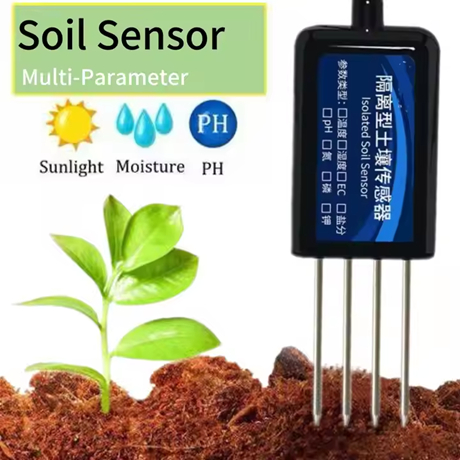
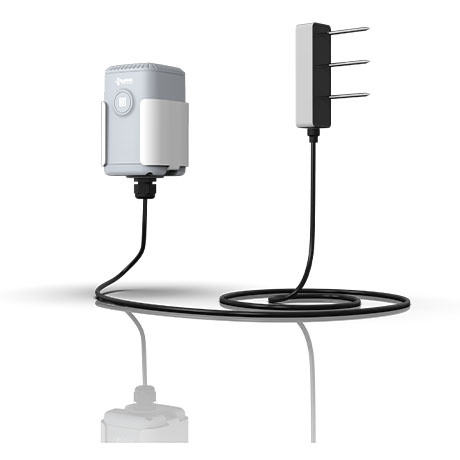
BGT’s soil moisture sensors, designed for both research and commercial irrigation, embody the latest advancements in accuracy, durability, and IoT integration—addressing the core pain points of traditional sensors while seamlessly fitting into smart irrigation ecosystems.
![automatic soil moisture sensor]()
automatic soil moisture sensor
2. Soil Moisture Fundamentals: What You’re Actually Measuring
Before diving into sensor technologies, it’s critical to clarify two key concepts often confused: soil water content and soil water potential. Choosing the right sensor starts with knowing what you need to measure.
2.1 Soil Water Content (Volumetric Water Content, VWC)
Soil water content refers to the volume or weight of water in soil relative to total soil volume/weight (e.g., 25% VWC means 1/4 of the soil’s volume is water). It’s the most common metric for irrigation, as it directly indicates how much water is available for plant roots. All in-situ (on-site) soil moisture sensors for automatic irrigation focus on VWC, as it’s easy to translate into irrigation triggers (e.g., “irrigate when VWC drops below 15%”).
2.2 Soil Water Potential (Matric Potential)
Soil water potential measures the energy required for plants to extract water from soil—think of it as the “tension” holding water to soil particles. Dry soil has high negative potential (hard for plants to pull water), while wet soil has low potential (easy for plants to absorb). This metric is critical for research on plant water stress but less common for standard irrigation, where VWC is more actionable.
Key Takeaway
For automatic irrigation systems, soil water content (VWC) sensors are the standard choice—they provide straightforward data that integrates seamlessly with controllers to trigger or stop irrigation. BGT’s sensors prioritize VWC accuracy, with options to measure complementary metrics (e.g., soil temperature, EC) for enhanced insights.
3. Soil Moisture Sensing Technologies: A Detailed Comparison
Not all soil moisture sensors are created equal. The market offers several core technologies, each with unique working principles, pros, cons, and use cases. Below is a breakdown of the most common options—focused on technologies relevant to automatic irrigation.
Sensor Technology | Core Working Principle | Pros | Cons | Ideal Use Cases | BGT’s Position |
Resistance Sensors | Measures electrical resistance between two electrodes; resistance decreases as soil moisture (and dissolved ions) increases. | - Low cost<br>- Simple to integrate into DIY projects<br>- Low power consumption | - Poor accuracy (calibration shifts with soil type/salinity)<br>- Degrades over time<br>- Sensitive to fertilizer/soil ions | - Home gardening<br>- Science fair projects<br>- Basic wet/dry alerts (no precision needed) | Not recommended for professional irrigation—BGT prioritizes accuracy over low cost. |
Dielectric Sensors (TDR/FDR/Capacitance) | Measures soil’s dielectric constant (ability to store electrical charge); water has a much higher dielectric constant (80) than soil minerals (3–6) or air (1), so changes in VWC directly impact readings. | - High accuracy (±2–3% with calibration)<br>- Insensitive to soil salinity (at high frequencies)<br>- Low power (ideal for IoT)<br>- Easy to install<br>- Research-grade reliability | - Higher cost than resistance sensors<br>- Low-quality models may fail in high-salinity soils | - Commercial agriculture<br>- Landscape irrigation<br>- Research projects<br>- Smart IoT irrigation systems | BGT’s flagship sensors use high-frequency dielectric (capacitance/FDR) technology—optimized for irrigation precision and long-term field use. |
Neutron Probes | Emits fast neutrons; hydrogen atoms in water slow neutrons down; measured slow neutrons correlate to VWC. | - Large measurement volume<br>- Insensitive to salinity<br>- Long-standing research credibility | - Expensive<br>- Requires radiation certification<br>- No continuous measurements<br>- Risk of radiation leakage | - Existing research programs with certification<br>- Highly saline soils | Not practical for standard automatic irrigation—BGT focuses on accessible, safe sensor solutions. |
COSMOS Sensors | Uses cosmic neutrons to measure VWC over large areas (800m diameter); averages moisture across wide landscapes. | - Extremely large coverage<br>- Automated data collection<br>- Ideal for satellite data validation | - Highest cost<br>- Poorly defined measurement volume<br>- Limited accuracy for small-scale irrigation | - Regional water management<br>- Satellite data ground-truthing | Not suited for on-farm/landscape irrigation—BGT serves site-specific irrigation needs. |
3.1 Why Resistance Sensors Fall Short for Professional Irrigation
Resistance sensors are tempting due to their low price, but their fatal flaw is sensitivity to soil ions (e.g., from fertilizer, salt, or different soil types). For the resistance method to work, soil ion levels must remain constant—a rare scenario in real-world irrigation.
For example: A resistance sensor calibrated in low-salinity soil will give wildly inaccurate readings if used in a field treated with fertilizer (which increases soil ions). As Figure 6 in the original research shows, a modest change in soil electrical conductivity (EC) can shift sensor calibration by 10x. This makes resistance sensors useless for precise irrigation—they can only tell you if soil is “wet” or “dry,” not how wet, which is critical for avoiding over/underwatering.
4. How Dielectric Sensors (TDR/FDR/Capacitance) Power Smart Irrigation
Dielectric sensors—including TDR (Time-Domain Reflectometry), FDR (Frequency-Domain Reflectometry), and capacitance—are the gold standard for automatic irrigation. Here’s why they work, and how BGT optimizes this technology for real-world use.
4.1 Core Working Principle
All dielectric sensors measure the soil’s dielectric constant (ε), a material’s ability to store electrical charge. The key insight: Water has a dielectric constant of ~80—far higher than soil minerals (ε=3–6) or air (ε=1). When soil moisture increases, the overall dielectric constant rises sharply, and sensors translate this change into VWC.
Unlike resistance sensors, dielectric sensors work by polarizing water molecules (not conducting current through ions). This means they’re insensitive to soil salinity (when using high frequencies, ≥50 MHz) and soil type—solving the two biggest accuracy issues of resistance sensors.
4.2 TDR vs. FDR vs. Capacitance: What’s the Difference?
While all three fall under the dielectric umbrella, they use slightly different methods to measure dielectric constant:
• TDR: Sends a high-frequency electrical pulse along a probe; the time it takes for the pulse to reflect back correlates to dielectric constant. TDR uses a range of frequencies, making it highly resistant to salinity.
• FDR: Measures the resonant frequency of an electrical circuit where soil acts as a capacitor; frequency shifts with dielectric constant.
• Capacitance: Treats soil as a capacitor’s dielectric layer; capacitance increases with dielectric constant (and thus VWC).
For irrigation purposes, performance differences between high-quality TDR, FDR, and capacitance sensors are minimal—what matters most is measurement frequency, probe design, and installation. BGT’s sensors use a hybrid FDR-capacitance approach with 80 MHz frequency, striking the perfect balance between accuracy, power efficiency, and cost.
4.3 BGT’s Dielectric Sensor Advantages
BGT’s soil moisture sensors build on dielectric technology with features tailored to automatic irrigation:
• High-frequency measurement (80 MHz): Eliminates interference from soil salinity and fertilizer ions.
• Robust probe design: Epoxy-coated needles prevent corrosion in wet soil, ensuring long-term durability (5+ years in field conditions).
• Large measurement volume (1010 mL): Captures representative soil moisture data, avoiding “spot measurements” that miss root zone variability.
• Integrated metrics: Measures VWC, soil temperature, and EC (electrical conductivity) in one sensor—EC data helps detect salt buildup, a common irrigation byproduct.
• Low power consumption: Ideal for battery-powered IoT irrigation systems, with 10+ years of battery life (depending on data logging frequency).
5. Soil Moisture Sensor-Driven Automatic Irrigation Systems: Components & Integration
A smart irrigation system isn’t just a sensor—it’s a cohesive ecosystem of hardware and software that turns moisture data into action. Below is a breakdown of the key components, with a focus on how BGT sensors integrate seamlessly into each part.
5.1 Core System Components
A. Soil Moisture Monitoring System
• Sensors: BGT’s dielectric sensors (e.g., BGT-SMS100) buried in the plant root zone (3–6 inches deep for turfgrass; 6–12 inches for crops).
• Valve Controllers: Connect sensors via 485 cable or wireless (LoRa) to receive moisture data; triggers solenoid valves to open/close.
• Field Controllers: Aggregates data from multiple sensors/valve controllers; transmits data to the cloud via GPRS/4G/LoRa.
B. Monitoring Center
• Hardware: Servers, computers, and dashboards for real-time monitoring.
• Software: BGT’s IoT cloud platform (BGT-Cloud) for data visualization, threshold setting, and remote control. Users can set VWC thresholds (e.g., “irrigate when VWC < 12%”) and receive alerts for system faults or extreme moisture levels.
C. Valve Control System
• Solenoid Valves: Controls water flow to individual irrigation zones. BGT’s system uses wireless solenoid valves with unique identifiers, enabling zone-specific irrigation (e.g., different thresholds for lawns vs. flower beds).
• Wireless Roaming Network: No field wiring required—reduces installation costs and maintenance.
D. Water Pump Control System
• Motorized Well Controllers & PLC: Monitors pump power consumption, pipeline flow, and operation status. Integrates with moisture data to optimize pump runtime (e.g., stops pumping if soil reaches target VWC).
• Water Meters: Tracks water usage for cost management and sustainability reporting.
5.2 How the System Works (Step-by-Step)
1. Data Collection: BGT sensors measure VWC, temperature, and EC every 5–15 minutes (adjustable) and send data to the field controller.
%1. Threshold Comparison: The field controller compares real-time VWC to user-set thresholds (e.g., “low” = 10%, “high” = 20%).
%1. Irrigation Trigger: If VWC drops below the “low” threshold, the controller sends a signal to the solenoid valve to open, starting irrigation.
%1. Auto-Shutoff: When VWC reaches the “high” threshold, the valve closes—preventing overwatering.
%1. Remote Monitoring: Users track data via BGT-Cloud, adjust thresholds, or manually override irrigation (e.g., during heavy rainfall).
6. Critical Best Practices: Sensor Installation & Calibration
Even the best sensor will fail if installed or calibrated incorrectly. Follow these guidelines to ensure accurate data and reliable irrigation.
6.1 Sensor Installation Rules
• Root Zone Placement: Bury sensors in the plant root zone (3 inches deep for turfgrass; 6–12 inches for crops). This is where plants extract water—measuring surface soil moisture leads to false triggers.
• Representative Soil: Install sensors in soil typical of the irrigation zone (avoid compacted, rocky, or sandy patches that don’t reflect overall conditions).
• No Air Gaps: Ensure the sensor probe is in tight contact with soil. Air gaps (from poor installation) cause inaccurate readings—use BGT’s borehole installation tool to insert probes perpendicular to soil, even in hard ground.
• Distance Guidelines:
○ At least 5 feet from irrigation heads (avoids direct water contact).
○ 5 feet from homes, driveways, or property lines.
○ 3 feet from planted beds (if irrigating lawns).
○ Avoid traffic areas (prevents soil compaction around the probe).
• Zone-Specific Sensors: For large or varied landscapes (e.g., lawns + vegetable gardens), use one sensor per zone—different plants have different water needs.
6.2 Calibration: The Key to Accuracy
Calibration ensures your sensor’s VWC readings match actual soil conditions. BGT recommends automatic calibration (site-specific) over manual calibration:
1. Saturate the Soil: After installing the sensor, apply 5+ gallons of water directly over the probe to fully saturate the soil (this establishes “field capacity”—the maximum water soil can hold without drainage).
%1. Wait 24 Hours: Do not water or allow rainfall on the area—this lets excess water drain, leaving soil at field capacity.
%1. Initiate Calibration: Use BGT-Cloud or the field controller to start auto-calibration. The sensor will read field capacity and set thresholds (typically 50–75% of field capacity, adjustable).
%1. Post-Establishment Calibration: For new lawns/crops, wait 30–60 days (establishment period) to calibrate—root depth and soil conditions change during this time.
Pro Tip from BGT
If you’re using multiple sensors, calibrate each one individually—soil conditions can vary even within a single zone. BGT’s sensors store calibration data locally, ensuring consistency across the system.
7. The Unmatched Benefits of Sensor-Driven Automatic Irrigation
Investing in a soil moisture sensor-powered irrigation system delivers tangible benefits for farmers, landscapers, and researchers—beyond just water savings.
7.1 Water Conservation (30–50% Savings)
The biggest advantage: Eliminating unnecessary irrigation. Timer-based systems often run on fixed schedules, even after rain or when soil is already moist. SMS systems bypass irrigation when VWC is above threshold—studies show they reduce water use by 30–50% compared to traditional systems. For Florida landscapes, this translates to thousands of gallons saved annually (critical in water-scarce regions).
7.2 Precise Irrigation for Healthier Plants
Plants thrive on consistent moisture—overwatering (root rot, fungal diseases) and underwatering (stress, yellowing) are both avoided. BGT’s integrated EC measurement adds another layer: high EC indicates salt buildup, allowing users to flush soil with water before it harms plants. The result? Lusher lawns, higher crop yields, and reduced plant mortality.
7.3 Labor Savings & Convenience
No more manual watering or adjusting timers. The system runs automatically, and users can monitor/control it remotely via BGT-Cloud. For large farms or commercial landscapes, this eliminates the need for on-site staff to manage irrigation—freeing up time for other tasks.
7.4 Data-Driven Decision Making
BGT-Cloud stores historical moisture, temperature, and EC data, allowing users to:
• Identify trends (e.g., soil dries faster in summer—adjust thresholds).
• Optimize irrigation schedules (e.g., water early morning to reduce evaporation).
• Track water usage and ROI (return on investment from water savings).
7.5 Sustainability & Compliance
Many regions (e.g., Florida, California) have strict water restrictions for outdoor use. SMS systems help users comply with these regulations by limiting water use to only what’s necessary. They also reduce runoff (a major source of water pollution), making irrigation more environmentally friendly.
8. Conclusion: The Future of Irrigation Is Sensor-Powered
Soil moisture sensors are no longer a “nice-to-have”—they’re a necessity for anyone looking to irrigate efficiently, sustainably, and profitably. By choosing the right technology (dielectric sensors, not resistance), integrating it into a smart system, and following best practices for installation/calibration, you can transform how you manage water.
BGT’s soil moisture sensors and automatic irrigation solutions are designed to simplify this transition—combining research-grade accuracy with user-friendly IoT integration. Whether you’re a farmer looking to boost crop yields, a landscaper aiming to save water, or a researcher needing reliable data, BGT’s ecosystem delivers the precision and durability you need.
The future of irrigation is data-driven, and soil moisture sensors are the foundation. By investing in this technology, you’re not just saving water—you’re building a more resilient, productive, and sustainable irrigation system for years to come.
About BGT
BGT specializes in research-grade soil sensors and smart irrigation solutions, with a focus on accuracy, durability, and IoT integration. Our dielectric soil moisture sensors are trusted by farmers, researchers, and landscape professionals worldwide to deliver reliable data for precise water management. Learn more about our products and services at [BGT’s official website].