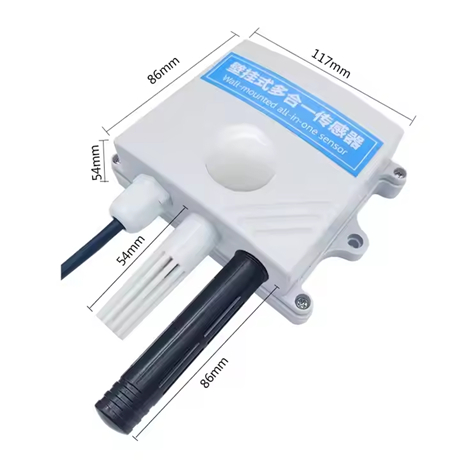
An ambient air temperature sensor is a core device engineered to measure the temperature of the surrounding air, converting thermal energy into readable electrical or digital signals—typically displayed in Celsius (°C) or Fahrenheit (°F). These sensors play an indispensable role in maintaining optimal conditions across industries, from home automation and industrial production to meteorological monitoring and medical care. By providing real-time, accurate temperature data, they underpin energy efficiency, operational safety, and regulatory compliance, ensuring thermal environments align with practical needs in both personal and professional settings.
1. Core Working Principles & Key Technology Types
Ambient air temperature sensors operate based on fundamental physical phenomena, with the thermoelectric effect and temperature-dependent resistance variation being the most widely adopted mechanisms. Below are the primary sensor types, each tailored to specific application requirements:
1. Thermocouples: Constructed from two dissimilar metal wires (e.g., copper and constantan), thermocouples generate a thermoelectric potential at their junctions when exposed to temperature differences. This potential is proportional to the temperature gap, allowing precise temperature calculation through potential measurement—ideal for high-precision industrial and medical scenarios.
2. Thermistors: Most thermistors feature a negative temperature coefficient (NTC), meaning their resistance decreases as temperature rises. Their high sensitivity and rapid response make them perfect for consumer electronics and home appliances, where real-time temperature tracking is critical.
3. Integrated Digital Sensors: Modern digital sensors integrate temperature-sensitive components, signal processing circuits, and output modules onto a single chip. Leveraging semiconductor material properties, they derive temperature values by monitoring electrical parameters like current or voltage, offering compactness and ease of integration.
4. Resistance Temperature Detectors (RTDs): Utilizing the temperature-dependent resistance of metallic conductors (e.g., platinum, nickel), RTDs deliver exceptional accuracy and stability, making them suitable for laboratory and industrial precision monitoring.
5. Infrared Sensors: As non-contact devices, infrared sensors measure temperature by detecting infrared radiation emitted by objects, eliminating the need for direct physical contact—ideal for scenarios where contact measurement is impractical.
![Ambient Air Temperature Sensor]()
Ambient Air Temperature Sensor
2. Standard Operational Workflow
The operation of an ambient air temperature sensor follows a standardized four-step workflow to ensure accurate data conversion and output:
1. Sensing: The sensor’s sensitive element detects fluctuations in ambient air temperature.
2. Conversion: Temperature changes are translated into electrical signals, such as voltage fluctuations or resistance variations.
3. Processing: Analog circuits or microprocessors process the electrical signals, converting them into digital values for easy interpretation.
4. Output: The final temperature value is displayed on a screen, logged in a data recorder, or transmitted to a remote monitoring system.
3. Diverse Application Scenarios
Ambient air temperature sensors are integral to multiple sectors, driving efficiency, safety, and comfort through precise temperature management:
1. HVAC & Smart Homes/Buildings: Integrated into heating, ventilation, and air conditioning (HVAC) systems and smart thermostats, they automatically adjust temperature settings based on real-time indoor/outdoor changes, maintaining comfort while reducing energy waste.
2. Automotive Industry: Monitoring engine and cabin temperatures to optimize vehicle performance, ensure passenger comfort, and safeguard driving safety.
3. Home Appliances: Regulating temperatures in refrigerators, freezers, and washing machines to ensure operational efficiency and extend appliance lifespan.
4. Meteorological & Environmental Monitoring: Deployed in weather stations to track temperature fluctuations, providing critical data for climate research and weather forecasting.
5. Industrial Automation: Stabilizing production environment temperatures to ensure process consistency and product quality, particularly in precision manufacturing and chemical production.
6. Agriculture: Monitoring greenhouse and farmland temperatures to guide crop planting and management strategies, optimizing agricultural yields.
7. Medical Equipment: Tracking patient body temperature to support diagnosis and treatment, while also maintaining stable conditions for temperature-sensitive medical supplies.
8. Electronic Devices: Preventing overheating in computers, servers, and consumer electronics by triggering cooling systems (e.g., fans), extending device lifespan and improving performance.
4. Advantages & Limitations
Ambient air temperature sensors offer significant benefits but also have inherent limitations that require consideration for optimal use:
1. Key Advantages:
○ Accurate Readings: Deliver precise temperature measurements to ensure optimal environmental conditions.
○ Durability: Designed to withstand diverse environmental conditions, ensuring long-term reliability.
○ Versatility: Adaptable to a wide range of applications, from consumer electronics to industrial settings.
2. Main Limitations:
○ Environmental Sensitivity: Sudden changes in humidity or pressure can compromise measurement accuracy.
○ Cost Variability: High-end precision sensors may incur significant costs, impacting budget constraints.
○ Calibration Needs: Regular calibration is essential to maintain accuracy over time.
5. Strategies for Effective Integration & Use
To maximize the utility of ambient air temperature sensors, proper integration and usage strategies are critical:
1. Select the Right Sensor: Match sensor type to application requirements—e.g., RTDs for precision laboratory use, thermistors for consumer electronics, and infrared sensors for non-contact scenarios.
2. Optimize Installation: Avoid direct sunlight, heat sources, and enclosed spaces; ensure proper air circulation and appropriate mounting height (1.2–1.5 meters above ground for outdoor use, 1.5–2 meters above floor for indoor use); use weatherproof, corrosion-resistant sensors for harsh environments.
3. Data Processing & Analysis: Leverage microprocessors or IoT platforms to process and analyze temperature data, enabling informed decision-making and automated control.
6. Latest Technological Innovations
Advancements in technology are continuously enhancing the capabilities of ambient air temperature sensors:
1. IoT Integration: Smart sensors now connect to IoT networks, enabling remote real-time monitoring, data sharing, and automated control across multiple devices.
2. Miniaturization: Smaller, more compact sensor designs allow integration into wearables, portable electronics, and other space-constrained applications.
3. AI-Driven Predictive Maintenance: Artificial intelligence algorithms analyze sensor data to predict maintenance needs, reducing downtime and improving operational efficiency.
Conclusion
Ambient air temperature sensors are foundational to modern temperature management, supporting comfort, safety, and efficiency across diverse sectors. By understanding their working principles, advantages, and limitations, and leveraging proper integration strategies and latest technological innovations, users can unlock their full potential. As IoT and AI technologies continue to advance, the role of these sensors in enhancing thermal environment management—both in personal and professional settings—will only grow in significance.