1. Introduction: The Core Role of Soil Moisture & Temperature Sensors in Modern Agriculture
Soil moisture and temperature are two foundational environmental factors determining crop growth and agricultural productivity. Soil moisture directly affects nutrient uptake, photosynthesis, and root development, while soil temperature regulates microbial activity, fertilizer decomposition, and organic matter accumulation. Traditional manual monitoring methods are inefficient and inaccurate, failing to meet the dynamic needs of precision agriculture.
Soil moisture and temperature sensors have emerged as critical tools for modern farming. By real-time capturing key soil parameters, these sensors provide reliable data support for irrigation scheduling, planting plan adjustment, and crop growth management. When integrated with IoT technology, they enable remote data transmission, centralized analysis, and automated control, further enhancing resource utilization efficiency and crop yield quality. This article systematically elaborates on the working principles, technical types, application scenarios, and selection criteria of these two sensors to help users maximize their practical value.
2. Core Concepts: What to Measure & Why It Matters
2.1 Soil Moisture: Beyond "Wet" and "Dry"
The term "soil moisture" is often imprecise in practical applications, as it can refer to two distinct parameters: soil water content and soil water potential. Clarifying their differences is essential for selecting the right sensor and ensuring measurement accuracy.
Soil Water Content: Refers to the amount of water in the soil, expressed by weight or volume percentage. Volumetric Water Content (VWC)—the ratio of water volume to total soil volume—is the most commonly measured parameter in in-situ monitoring. It directly reflects the actual water availability for crops and is the core indicator targeted by most soil moisture sensors.
Soil Water Potential: Also known as soil suction, it reflects the energy state of soil water and the difficulty of crop water absorption. It is determined by the adhesion of water molecules to soil particles: as soil moisture decreases, the boundary layer of water around particles thins, and remaining water molecules are more tightly bound, reducing their potential energy and availability to plants. This parameter is critical for predicting crop water stress and soil water movement but is less commonly measured in routine agricultural applications compared to VWC.
2.2 Soil Temperature: A Driver of Biological & Chemical Processes
Soil temperature, including surface and subsurface temperature, is a key factor influencing agricultural ecosystems. It directly affects seed germination, root growth, and the activity of soil microbes responsible for fertilizer decomposition and nutrient mineralization. For example, low temperatures slow down nitrogen mineralization, limiting crop nutrient uptake, while excessively high temperatures inhibit root respiration and microbial activity.
Different crops have specific temperature requirements for growth stages. Measuring soil temperature at different depths (adapted to crop root structures) helps adjust planting timing, irrigation schedules, and mulching strategies to create optimal growing conditions. Surface soil temperature can be measured via infrared (IR) technology, while subsurface temperature requires buried probes for accurate data collection.
3. Working Principles & Technical Types of Soil Moisture Sensors
Common soil moisture sensing technologies fall into two main categories: resistance-based and dielectric permittivity-based (including TDR, FDR, and capacitance). Their performance, accuracy, and applicability vary significantly, making selection critical for specific use cases.
3.1 Resistance-Based Soil Moisture Sensors
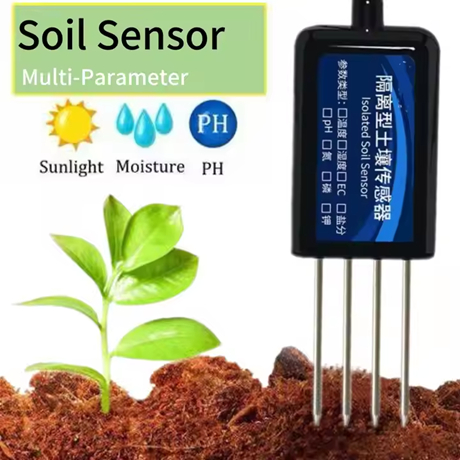
Resistance sensors operate by creating a voltage difference between two electrodes inserted into the soil, allowing a small current to flow through the soil matrix. Since pure water is a poor conductor, current is primarily carried by ions in soil water. The core principle is that soil resistance decreases as moisture content increases, with sensor output reflecting resistance or electrical conductivity (EC) values.
However, this technology has inherent limitations that prevent it from meeting research or precision agriculture standards. It relies on the unvalidated assumption that soil ion concentration remains constant. In practice, fertilization, irrigation, and soil type variations cause ion fluctuations, leading to significant measurement errors. For example, a modest change in soil saturation extract EC (ECe) can alter sensor calibration by an order of magnitude.
Pros & Cons: Advantages include ultra-low cost, simple integration with DIY projects, and low power consumption. Disadvantages are poor accuracy, sensitivity to soil salinity and type, and short service life due to electrode degradation. They are only suitable for low-demand scenarios such as home gardening or science fair projects.
3.2 Dielectric Permittivity-Based Sensors (TDR, FDR, Capacitance)
Dielectric permittivity technology is the gold standard for high-accuracy soil moisture measurement, widely used in research and precision agriculture. Each material has a unique dielectric constant (ability to store electrical charge): air = 1, soil solids = 3–6, and water = 80. Since the volume of soil solids is stable in the short term, changes in the soil's overall dielectric constant are primarily driven by variations in water and air content, enabling accurate VWC calculation.
Three mainstream types of dielectric permittivity sensors:
• Capacitance Sensors: Treat the soil as a component of a capacitor in an electrical circuit. The sensor measures the soil's capacitance, which is converted to VWC via a calibration curve. High-frequency capacitance sensors (≥50 MHz) avoid polarizing salt ions in soil water, minimizing EC interference and improving accuracy. They are favored for their ease of installation, low power consumption, and cost-effectiveness, making them suitable for large-scale field monitoring with multiple measurement points.
• TDR (Time-Domain Reflectometry) Sensors: Emit high-frequency electrical pulses along a transmission line (probe) inserted into the soil. The sensor measures the travel time of pulses reflected back from the probe's end, which is inversely proportional to the soil's dielectric constant. TDR signals contain a range of frequencies, providing strong resistance to salinity interference. They offer high accuracy (±2–3% with soil-specific calibration) and are widely recognized in scientific research, though they require more complex installation (trench digging rather than simple hole insertion) and consume more power.
• FDR (Frequency-Domain Reflectometry) Sensors: Operate by measuring the resonant frequency of an electrical circuit where the soil acts as a capacitor. Resonant frequency decreases as soil dielectric constant (and thus moisture content) increases. Like capacitance sensors, FDR sensors are easy to install and low-power, with performance comparable to TDR when properly calibrated. They are commonly used in agricultural and environmental monitoring applications.
Key Performance Factor: Measurement Frequency: Not all dielectric sensors perform equally. Low-frequency sensors (kHz range) polarize both water molecules and salt ions, behaving similarly to resistance sensors and suffering from poor accuracy. High-frequency sensors (≥50 MHz) minimize ion polarization, reducing salinity sensitivity and improving measurement reliability. Circuit design also impacts performance—well-designed high-frequency sensors can mitigate errors from soil type, bulk density, and clay content.
![Soil Moisture Sensor]()
4. Working Principles & Characteristics of Soil Temperature Sensors
Soil temperature sensors typically use contact-based sensing elements to measure temperature via changes in electrical properties (e.g., resistance, voltage) of materials in response to thermal variations. Common sensing technologies include thermistors, thermocouples, and digital temperature sensors (e.g., DS18B20).
• Thermistor Sensors: Utilize semiconductor materials whose resistance changes exponentially with temperature. They offer high sensitivity and accuracy (±0.1–0.5°C) within a limited temperature range (-40°C to 125°C), suitable for most agricultural scenarios. They are compact, low-cost, and easy to integrate with data loggers.
• Thermocouple Sensors: Consist of two different metal wires joined at a junction. Temperature changes generate a small voltage (Seebeck effect) proportional to the temperature difference between the junction and a reference point. They have a wide temperature range (-200°C to 1300°C) but lower accuracy (±1–2°C) compared to thermistors, making them suitable for extreme environment monitoring (e.g., frozen soils or high-temperature composting).
• Digital Temperature Sensors: Integrate sensing elements and signal processing circuits, outputting digital data directly via protocols like I2C or 1-Wire. They offer high accuracy, easy calibration, and simple integration with IoT systems, eliminating signal interference issues associated with analog sensors. They are increasingly popular in modern precision agriculture.
Core Characteristics: High-quality soil temperature sensors feature waterproof (IP68 or higher) and corrosion-resistant enclosures (e.g., stainless steel) to withstand long-term burial in soil. They should have good thermal conductivity to ensure rapid response to temperature changes and minimal self-heating to avoid measurement bias. Installation depth is customizable based on crop root depth—15–30 cm for shallow-rooted crops (e.g., vegetables) and 45–60 cm for deep-rooted crops (e.g., fruit trees).
5. IoT Integration: Enhancing Sensor Value in Smart Agriculture
The integration of soil moisture and temperature sensors with IoT technology transforms standalone measurement into intelligent, data-driven management. IoT systems enable real-time data transmission, remote monitoring, and automated control, addressing key pain points in traditional sensor applications (e.g., manual data collection, delayed decision-making).
5.1 Core Components of IoT-Enabled Sensor Systems
• Sensors: High-performance soil moisture (dielectric permittivity-based) and temperature sensors with standardized output interfaces (e.g., MODBUS RS485, SDI-12) for easy integration with data loggers.
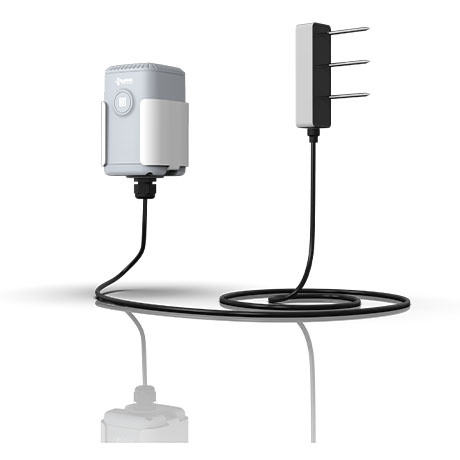
• Data Loggers/Gateways: Collect data from multiple sensors, process it locally, and transmit it to cloud platforms via wireless communication technologies (LoRaWAN, NB-IoT, or 4G). Advanced loggers support remote configuration and low-power operation, suitable for long-term field deployment.
• Cloud Platforms: Store, visualize, and analyze sensor data. Key functions include real-time data dashboards, historical trend analysis, threshold alerts (via email/SMS for abnormal moisture/temperature levels), and data sharing among stakeholders. Data can be exported to Excel, R, or MatLab for further analysis.
• Automated Control Systems: Integrate with irrigation pumps, fertilization equipment, or mulching systems to trigger automatic actions based on sensor data. For example, when soil moisture drops below a threshold, the system initiates irrigation; when temperature exceeds an optimal range, it activates shade cloths or heating devices.
5.2 Key Benefits of IoT Integration
• Efficiency Improvement: Eliminate manual data collection and on-site adjustments, reducing labor costs and human error. Remote monitoring allows farmers to manage multiple fields from a single location.
• Timely Decision-Making: Real-time data and threshold alerts enable rapid responses to adverse soil conditions (e.g., drought, waterlogging, extreme temperatures), minimizing crop damage.
• Resource Optimization: Data-driven irrigation and temperature management reduce water waste and energy consumption. For example, matching irrigation schedules to actual soil moisture levels can reduce water use by 20–30% while maintaining or improving crop yields.
• Data-Driven Insights: Long-term historical data analysis reveals trends in soil moisture and temperature, supporting optimized planting plans, crop rotation strategies, and fertilizer application schedules.
6. Application Scenarios of Soil Moisture & Temperature Sensors
Soil moisture and temperature sensors are widely used in agriculture, environmental monitoring, and scientific research. Their practical value is most evident in the following scenarios:
6.1 Precision Agricultural Management
In large-scale crop cultivation (wheat, corn, cotton), sensors monitor soil moisture and temperature at multiple depths and locations. Farmers use the data to implement variable-rate irrigation and customized planting schedules, matching resource inputs to crop needs. This approach improves yield quality, reduces resource waste, and enhances farm profitability.
6.2 Greenhouse & Hydroponic Systems
Controlled environments require precise regulation of soil conditions. Sensors monitor moisture and temperature in greenhouse soil or hydroponic growing media, integrating with climate control systems to maintain optimal growing conditions. For example, in tomato greenhouses, maintaining soil temperature at 20–25°C and VWC at 60–70% promotes root development and fruit production.
6.3 Soil Science Research
Researchers use high-accuracy sensors (e.g., TDR) to conduct long-term monitoring of soil moisture and temperature dynamics, studying the impacts of climate change, land use, and agricultural practices on soil health. For example, in arid region research, sensors track moisture retention to evaluate drought-resistant crop varieties and water-saving irrigation techniques.
6.4 Organic Waste Composting
Soil temperature is a critical indicator of composting efficiency, as microbial decomposition of organic waste generates heat. Sensors monitor temperature changes during composting, guiding turning and moisture adjustment to ensure optimal decomposition conditions (temperature 55–65°C) and produce high-quality compost.
7. Selection Criteria for Soil Moisture & Temperature Sensors
Selecting the right sensors requires balancing accuracy, reliability, cost, and application needs. Key criteria include:
7.1 Clarify Application Requirements
• Precision Agriculture/Farming: Prioritize dielectric permittivity-based moisture sensors (high-frequency capacitance or FDR) and digital temperature sensors with IoT compatibility. Ensure accuracy (VWC error ≤±3%, temperature error ≤±0.5°C) and durability for long-term field deployment.
• Scientific Research: Choose TDR or high-end capacitance sensors for moisture (error ≤±2%) and thermistor sensors for temperature (error ≤±0.1°C). Select sensors with traceable calibration and compatibility with research-grade data loggers.
• Home Gardening/Amateur Use: Opt for cost-effective resistance-based moisture sensors and basic thermistor temperature sensors. Prioritize ease of use over high accuracy.
8. Installation & Maintenance Best Practices
8.1 Installation Guidelines
1. Site Selection: Choose representative areas, avoiding waterlogged, fertilized, or compacted zones. Keep sensors 10–20 cm away from crop roots to prevent damage and interference.
2. Avoid Air Gaps: For buried sensors, drill holes matching the probe diameter and compact surrounding soil to ensure tight contact. Air gaps cause significant moisture measurement errors.
3. Depth Configuration: Install moisture and temperature sensors at depths corresponding to crop root zones. Use multiple sensors at different depths (e.g., 15 cm, 30 cm, 60 cm) to monitor vertical soil condition variations.
4. Waterproof Protection: Seal cable connections with waterproof tape and place data loggers in waterproof, sun-shielded enclosures to extend service life.
5. On-Site Calibration: Calibrate sensors using local soil samples (compared to laboratory measurements) to adjust for soil type, bulk density, and salinity effects, improving measurement accuracy.
8.2 Maintenance Tips
• Regular Inspection: Check probes for corrosion, soil buildup, or physical damage every 1–3 months. Clean probes with a soft brush to remove soil residues.
• Calibration Verification: Re-calibrate sensors annually or after significant changes in soil conditions (e.g., heavy fertilization, flooding) to maintain accuracy.
• Power Management: For battery-powered systems, monitor power levels and replace batteries as needed. Use solar panels for long-term remote deployment.
9. Conclusion
Soil moisture and temperature sensors are indispensable tools for modern agriculture, enabling precise, data-driven soil management. By understanding their working principles, technical types, and application scenarios, users can select the right sensors to optimize irrigation, adjust planting strategies, and improve crop yield quality. The integration of IoT technology further enhances sensor value, transforming traditional farming into efficient, sustainable smart agriculture.
When selecting and using these sensors, prioritizing accuracy, durability, and compatibility with application needs is key. Following best practices for installation and maintenance ensures reliable long-term performance. As sensing and IoT technologies advance, soil moisture and temperature sensors will continue to play a critical role in addressing global agricultural challenges such as resource scarcity and climate change, contributing to sustainable food production.