Blogs
​Photovoltaic Principle Solar Radiation Sensors
​Photovoltaic Principle Solar Radiation Sensors ​Photovoltaic Principle Solar Radiation Sensors

loading

​Photovoltaic Principle Solar Radiation Sensors

Share to:
facebook sharing button
twitter sharing button
wechat sharing button
whatsapp sharing button
sharethis sharing button
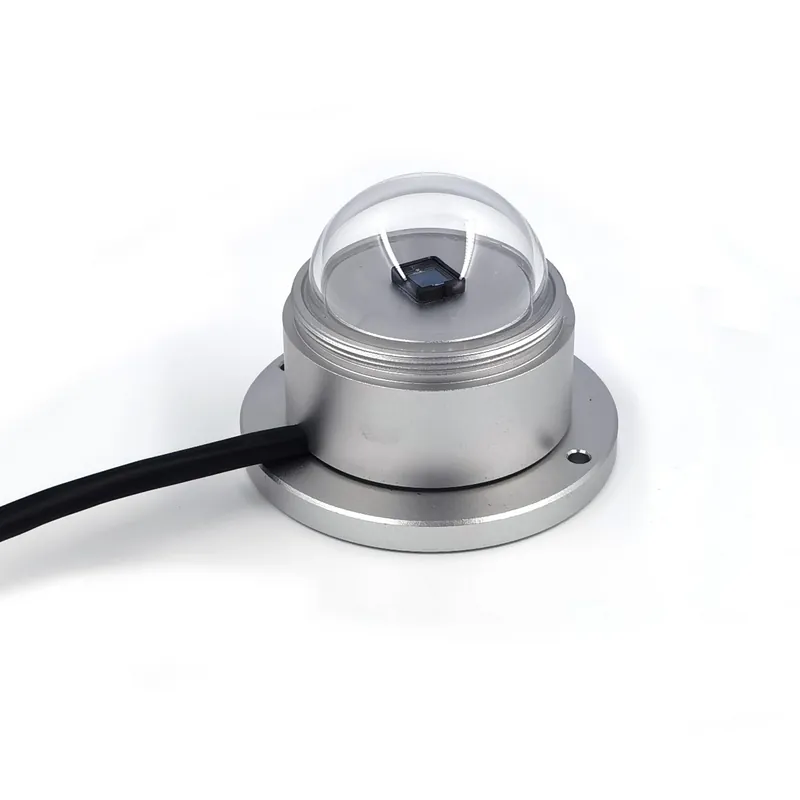
The BGT-JYZ solar radiation sensor (transmitter) can be used to measure total solar radiation in the spectral range of 300-1000nm. If the inductive surface is down to measure reflected radiation, the shading ring can also measure scattered radiation.
Availability:
A photovoltaic pyranometer is a crucial instrument in modern meteorology, environmental science, and the energy sector for measuring solar radiation.

Working Principle

This type of sensor operates based on the photovoltaic effect. Its core component is a photodiode, which is specially treated with an optical filter.

  • How it Works: When sunlight (both direct and diffuse) strikes the sensor, it passes through an optical dome and a critical optical filter. This filter's job is to correct the spectral response of the photodiode, making it mimic the ISO-standard "solar spectrum" for short-wave radiation (approximately 0.3 to 3 μm), which is essential for accurate environmental measurements. The photodiode then converts the received light energy into a linear electrical signal (voltage or current). This signal is proportional to the solar radiation intensity, and a calibration factor is applied to calculate the exact value.

  • Measurement Parameter: It measures Global Horizontal Irradiance (GHI), also known as total solar short-wave radiation. The standard unit is Watts per square meter (W/m²).

  • Comparison with Thermopile Sensors:

    • Thermopile Principle: Uses a black-and-white thermopile that generates a voltage based on the temperature difference caused by absorbed solar energy. It is considered the highest standard for accuracy (as defined by the World Meteorological Organization) but is more expensive, larger, and has a slower response time.

    • Photovoltaic Principle: Offers advantages like lower cost, fast response time, compact size, and low power consumption. While traditionally seen as less accurate than premium thermopile sensors—especially concerning angular (cosine) response and spectral accuracy—advancements in technology have significantly improved their performance. High-quality photovoltaic sensors now provide accuracy suitable for the vast majority of commercial and industrial applications.

Data Sheet
Item No.
BGT-JYZ2
Spectral range
300~3000nm
Measuring range
0~1500W/m2
Power Supply
DC5V / DC12V /DC24V
Output signal
RS485 / 4-20mA / 0-2.5V/0-5V
Cable Length
Standard 2.5M
Response time
<5s
Load Capacity
Current type:RL≤250Ω
Voltage type:RL≥1KΩ
Temperature correlation
<±0.08%℃
Cosine response
<±10%(When the sun Angle of 10°)
Nonlinear
<±2%
Annual variance ratio
<±2%
Work environment
Temperature-50℃~85℃
Humidity:≤100%RH
Net Weight
420 g
Power consumption
1.8 mW
Installation
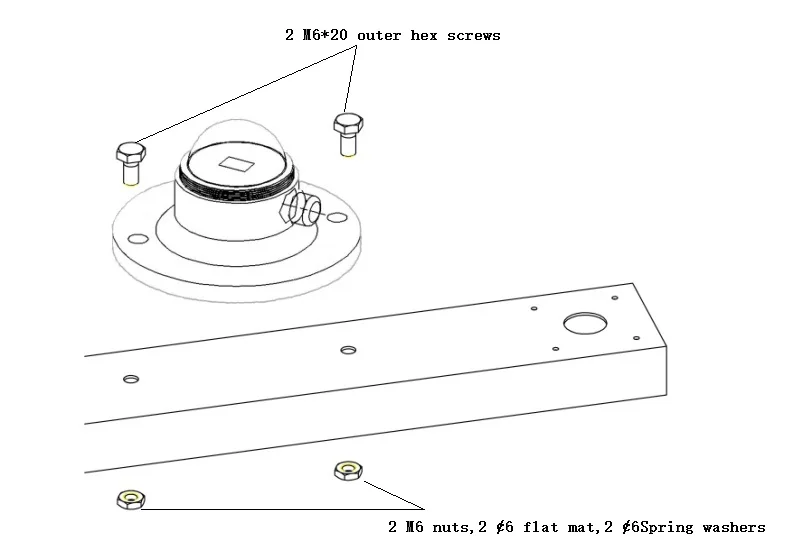
1. Ensure that the mounting bracket is parallel to the ground;
2. As shown in the figure, use M6 screws and nuts to fix the sensor on the mounting bracket through two mounting holes of the sensor;
3. Please avoid removing the sensor during installation.


 Application Scenarios

The applications for photovoltaic pyranometers are extensive and include the following key areas:
1. Meteorological Monitoring & Weather Forecasting

  • Application: Deployed as a standard component in automatic weather stations. The solar radiation data is a critical input for numerical weather prediction models and is essential for researching climate change and phenomena like the urban heat island effect.

2. Solar Energy Industry (Core Application)

  • Photovoltaic (PV) Power Plant Performance Monitoring: Installed adjacent to solar panel arrays, they measure the actual solar irradiance incident on the panels. By comparing this data with the actual electrical output of the PV system, operators can calculate the system's efficiency, monitor performance, and identify issues like shading, soiling, or component failures.

  • Solar Resource Assessment: Before constructing a new solar farm, these sensors are used to conduct long-term (typically one year or more) radiation monitoring at potential sites. This data is vital for accurately assessing the solar energy potential and ensuring the financial viability of the project.

3. Agriculture & Environmental Science

  • Precision Agriculture & Smart Irrigation: Solar radiation is the primary energy source for plant photosynthesis. Monitoring irradiance data helps farmers understand crop energy intake and is used in evapotranspiration (ET) models to optimize irrigation schedules, thereby conserving water.

  • Greenhouse Climate Control: In commercial greenhouses, radiation data is a key input for automating systems like shade screens and ventilation to maintain optimal light and temperature conditions for plant growth.

  • Ecological Research: Used to study the energy balance of various ecosystems, such as forests and bodies of water.

4. Building Management & Energy Efficiency

  • Smart Buildings: Radiation data can be integrated into Building Management Systems (BMS) to automatically control blinds or shades. This helps reduce solar heat gain in the summer (lowering cooling costs) and can leverage passive solar heating in the winter.

  • Building Physics Research: Used to evaluate the thermal performance of building materials and study overall building energy consumption.

5. Scientific Research & Education

  • Scientific Studies: Solar radiation is a fundamental energy input parameter for research in atmospheric physics, oceanography, and hydrology.

  • Educational Tools: Used in universities and technical colleges for hands-on learning in physics, meteorology, and renewable energy courses.

In summary, photovoltaic pyranometers serve as the essential "eyes" for understanding and utilizing solar energy. Thanks to their excellent cost-performance ratio and reliability, they are indispensable tools across a wide range of fields critical to sustainable development, from weather forecasting and large-scale solar power generation to precision agriculture and intelligent building management.


Further details , please contact us !

Home / Products / Meteorological Monitoring / Radiation Sensors / ​Photovoltaic Principle Solar Radiation Sensors
Professional Techincal Team
Customized Ready-to-Use Natural Disaster Monitoring & Early Warning Systems

Quick Link

Solution

Contact Us

More >>
 
Tel: +8618001182408
Whatsapp: +8613021266100
Email:admin@bgt-hydromet.com
Address: Fengtai District, Beijing
Copyright ©  2025 BGT Hydromet. All Rights Reserved.