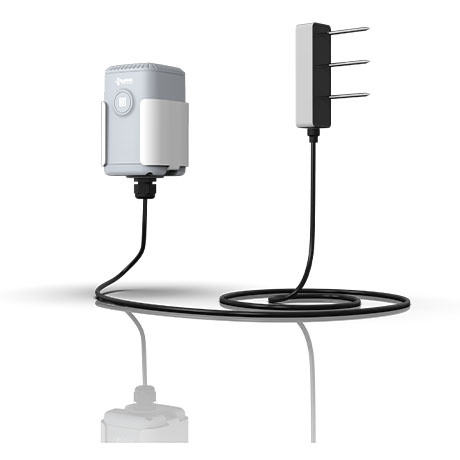
Water quality is a critical factor in environmental protection, water resource management, aquaculture production, agricultural irrigation, and industrial applications. As organizations increasingly require accurate and continuous water information, traditional water monitoring methods are facing more challenges in terms of efficiency, cost, and scalability.
In many water monitoring projects, especially those located in remote, harsh outdoor environments, customers need to collect water quality data from rivers, lakes, reservoirs, ponds, and irrigation channels. However, traditional monitoring methods often rely on manual sampling or complex wired systems, making it difficult to achieve continuous monitoring and rapid response.
To address these challenges, BGT Hydromet provides a turnkey LoRaWAN Water Quality Monitoring Solution. This integrated ecosystem natively fuses high-precision water quality sensors, ultra-low-power LoRaWAN telemetry edge nodes, heavy-duty gateways, and data cloud platforms into a complete wireless IoT monitoring network.
By delivering a true one-stop integrated architecture (sensors, dataloggers, wireless communication, power arrays, and dashboard visualizers pre-configured), this solution eliminates the complexity of purchasing independent devices and reduces the total cost of ownership by 30% to 50% compared to Western alternatives, with ready-to-ship stock for immediate global delivery.
Why Do Customers Need an Intelligent Water Quality Monitoring System?
Limitations of Traditional Water Quality Monitoring Methods
Traditional water quality monitoring usually requires technicians to collect physical water samples and perform laboratory analysis or manually check monitoring equipment. Although this method can provide reliable measurement results, it is not ideal for applications that require long-term and continuous monitoring. For example, environmental agencies may need to monitor multiple river sections, while aquaculture farms need continuous information about oxygen levels and water conditions. In these situations, manual monitoring cannot provide timely data.
Main Challenges of Traditional Monitoring
Challenge
Impact & Core Operational Vulnerabilities
Manual sampling
Cannot provide continuous real-time monitoring; frequent manual inspections trigger high labor overhead.
Wired monitoring systems
High installation and maintenance costs; difficult cable installation in remote or grid-isolated areas.
Remote monitoring locations
Difficult access, limited infrastructure, and unstable power supply conditions.
Separate equipment procurement
Complicated integration between multi-vendor sensors, communication modems, and disparate platforms.
Lack of centralized data management
Difficult data analysis and decision-making; hard to expand monitoring points when project requirements scale.
BGT Hydromet LoRaWAN Water Quality Monitoring Solution
BGT Hydromet develops a complete IoT Water Quality Monitoring System optimized for outdoor, rugged, and tropical environmental monitoring applications. The solution combines advanced chemical/physical sensing technology, long-range wireless communication, and data management capabilities.
How the System Works
Water quality sensors are pre-wired with custom waterproof plugs and installed in the target monitoring area.
Sensors collect selected water parameters according to the configured sampling interval.
The intelligent LoRaWAN node reads sensor data through standard RS485 Modbus-RTU communication.
Data is transmitted wirelessly to the field LoRaWAN gateway over extreme distances.
The gateway uploads information to the cloud platform or the customer's private server via 4G LTE or Ethernet backhaul.
Users remotely check real-time data, historical records, and threshold alarm information via PC dashboards or Mobile APPs.
1. Water Quality Sensor – Accurate 8+ Multi-Parameter Measurement
The water quality sensor is the foundation of the monitoring system. It directly measures environmental conditions and provides accurate data for analysis and decision-making. To prevent field integration failure, BGT Hydromet supplies all sensors pre-engineered with external waterproof plugs and customized pin assignments processed directly at the factory before shipment.
Depending on project requirements, a single integrated BGT station supports the simultaneous multi-parameter monitoring of 8+ critical parameters. To ensure optimal power budgeting and signal purity, each individual telemetry edge node connects to exactly one sensor array.
Supported Parameter
Underlying Sensor Technical Value & Application
pH Value
Measures acidity and alkalinity changes; essential for tracking chemical runoff and chemical discharge.
Dissolved Oxygen (DO)
Important indicator for commercial aquaculture density optimization and aquatic ecosystem balance.
Temperature
Monitors environmental and thermal changes across diverse water bodies.
Turbidity (TSS)
Evaluates water clarity and suspended particles; ideal for drinking water reservoirs and dredging projects.
Electrical Conductivity (EC)
Measures dissolved substances and salinity intrusion in agricultural irrigation and industrial lines.
Ammonia Nitrogen
Supports precise toxic load management in intensive fish and shrimp farming environments.
COD & TOC
Helps evaluate organic pollution levels for wastewater compliance and industrial discharge checking.
Unlike traditional wired data acquisition systems, the wireless node allows monitoring points to be deployed in locations where cable installation is impossible. Field configurations and logging frequencies can be customized effortlessly using a mobile device via near-field NFC configuration.
Advanced Smart Sampling Logic
The system supports instantaneous sampling, threshold alarm polling, and average sampling. To prevent data distortion from temporary fluctuations, the node can be configured to poll the sensor every 1 or 5 minutes (user adjustable), cache the readings internally, and upload the mathematical average value exactly every 30 minutes.
Solar-Powered LoRaWAN Node (BGT-SN200): Merges a solar-harvesting panel with a high-capacity lithium backup pack, guaranteeing 30+ days of autonomous continuous operation during overcast or rainy conditions. Highly recommended for long-term outdoor arrays lacking stable grid connections.
Battery-Powered LoRaWAN Node (BGT-SN100): Driven by ultra-low-power industrial lithium batteries, providing a continuous operational life of 3 full years without manual maintenance. Ideal for compact, low-power deployments.
Flexible Installation Engineering: Supports wall-mounting or vertical pole-strapping with factory-included screws and heavy-duty hose clamps. For discreet or specialized environmental monitoring, the node is certified to be buried underground at a depth of 3 to 5 cm (Note: The node housing cannot be submerged directly underwater).
3. LoRaWAN Gateway – Long-Range Wireless Communication Bridge
The gateway intercepts edge RF packets and translates them into secure internet backhaul streams. Due to the high-frequency concurrent data processing required, gateways run continuously and must rely on main utility power grid connections (solar power setups require large-scale external battery arrays).
Outdoor Industrial Gateway
Robust IP67 weatherproof enclosure.
Supports PoE (Power over Ethernet) injection through an external PoE converter.
Includes an external 12V DC adapter connection socket.
Equipped with a standard high-gain 80 cm antenna for maximum communication range.
Optional 40 cm antenna available for space-constrained deployments.
Indoor Enterprise Gateway
Compact industrial design.
Powered through a standard 110V–220V self-adaptive plug-in power adapter.
Suitable for indoor monitoring networks and enterprise deployments.
Gateway Environment
Line-of-Sight (LOS) Communication Distance
Urban / Obstructed Communication Distance
Outdoor Gateway Deployment
Up to 10 Kilometers (10 km) maximum range
Up to 5 Kilometers (5 km) maximum range
Indoor Gateway Deployment
Up to 5 Kilometers (5 km) visual range
Up to 2 Kilometers (2 km) interior range
4. Data Platform – Northbound RESTful API & Intelligent Monitoring
BGT Hydromet transforms raw telemetry into valuable information through modern visualization methods including PC Dashboards, Mobile APPs, and industrial large-screen monitoring visualizers.
For organizations with legacy software setups, the BGT Data Platform natively supports open standard RESTful API interfaces, enabling seamless, automated data mapping directly into customer ERP systems or local government environmental protection monitoring networks without requiring proprietary middleware.
Key Advantages of BGT Hydromet Water Quality Monitoring Solution
Tropical & Southeast Asia Climate Hardening
Engineered specifically to withstand extreme outdoor conditions. The system features an operational temperature envelope of -20°C to 60°C, reinforced with high-grade salt-spray corrosion protection and heavy-duty integrated lightning protection.
Real-Time Remote Monitoring
Water quality conditions can change quickly due to weather, environmental factors, or human activities. Continuous tracking allows operators to detect abnormal conditions earlier, reducing manual inspections and improving response efficiency.
Low Power Consumption Design
With dual-layer battery and solar harvesting options, the entire edge node array operates independently for years in grid-absent territories.
Highly Flexible & Scalable System Architecture
Every monitoring project has different requirements. BGT Hydromet provides customized configurations spanning sensor selection, number of monitoring points, and communication paths. The system can start with a single edge point and expand smoothly into a massive multi-node IoT network.
Water Quality Monitoring System Industry Applications
Aquaculture Water Quality Monitoring
In commercial aquaculture, continuous monitoring helps farmers understand water parameters such as dissolved oxygen, pH, temperature, and ammonia nitrogen in real time. This minimizes biological risks, improves farm management efficiency, and maintains healthier aquatic environments for sensitive fish and shrimp populations.
River, Lake, and Surface Water Monitoring
Environmental protection organizations require continuous monitoring to protect public water resources. The system provides long-term, high-integrity data sets across natural rivers, lakes, and open surface water bodies for scientific analysis and compliance management.
Reservoir and Drinking Water Quality Monitoring
Reservoirs require highly reliable, automated monitoring solutions to protect input water quality and support public resource management, vastly reducing the frequency and travel costs of manual inspection teams.
Agricultural Irrigation and Drainage Channels
Agricultural projects increasingly deploy smart water management solutions. Real-time salinity, pH, and conductivity tracking help users understand agricultural irrigation water conditions to support precision smart-farming networks.
Industrial Wastewater and Sewage Monitoring
Wastewater monitoring sites often present challenging installation environments characterized by corrosive vapors. Wireless IP67 configurations reduce manual sampling danger, lower compliance risks, and support clean environmental audit tracking.
Water Quality Sensor Only vs. Complete Water Quality Monitoring Solution
Many customers initially consider purchasing only raw water quality sensors. However, sensors alone cannot provide a complete remote monitoring system. A complete solution combines sensing, communication, power, and data management technologies, making it more suitable for real-world industrial applications.
Capability Feature
Water Quality Sensor Only
BGT Hydromet Complete Solution Matrix
Data Measurement Output
✓ (Raw Analog/Digital Only)
✓ (Integrated Industrial RS485 Modbus-RTU)
Wireless Long-Range Transmission
✕
✓ (Up to 10 km Wireless LoRaWAN Protocol)
Autonomous Power Management
✕
✓ (3-Year Lithium Battery / 30-Day Solar Backup System)
Remote Data Cloud Access
✕
✓ (PC Dashboard & Mobile APP Native Integration)
Multi-Point IoT Network Expansion
Limited
✓ (Highly Scalable Plug-and-Play Topology)
Open Enterprise Software Interfacing
Limited
✓ (Standard RESTful API for Gov Platforms & ERPs)
Frequently Asked Questions (FAQ)
Q: What is the maximum communication distance between the LoRaWAN node and gateway?
A: Communication distance depends on gateway deployment conditions.
Gateway Type
Line-of-Sight Distance
Urban / Obstructed Distance
Outdoor Gateway
Up to 5 km
Up to 5 km depending on environment
Indoor Gateway
Up to 2 km
Up to 2 km depending on building conditions
Actual performance may vary based on terrain, obstacles, and RF interference.
Q: How are the LoRaWAN gateways powered?
A: Gateway power options vary by deployment environment:
Outdoor Gateway
Powered through PoE (Power over Ethernet) using an external PoE injector.
Optional 12V DC adapter connection is available, although this may reduce waterproof performance.
Continuous power supply is required because gateways operate 24/7.
Indoor Gateway
Powered by a standard 110V–220V AC adapter.
Includes a universal power adapter suitable for industrial and commercial installations.
Because gateways consume significantly more power than sensor nodes, solar-powered gateway deployments typically require large battery systems and are not commonly recommended.
Q: What installation methods are supported?
A: Both nodes and gateways support flexible installation methods.
Pole mounting
Wall mounting
Stainless steel hose clamp installation
Installation accessories such as mounting brackets, screws, and clamps are included with delivery.
Q: How are water quality sensors connected to the system?
A: BGT Hydromet provides waterproof industrial connectors and matching cable pin assignments before shipment. Sensors are factory-prepared for field installation, reducing deployment complexity and minimizing wiring errors.
Q: Can customers use their own LoRaWAN gateway?
A: Yes. Customers can integrate BGT sensor nodes with existing LoRaWAN gateways. Before deployment, customers need to provide gateway information and network parameters. BGT will supply:
Device parameter files
Data decoding scripts
Integration documentation
This allows rapid integration into third-party LoRaWAN platforms.
Q: Can sampling intervals and upload frequencies be customized?
A: Yes. The system supports NFC-based local configuration through the BGT mobile application.
Users can configure:
Sampling intervals
Data upload intervals
Alarm thresholds
Communication settings
Q: Can the system upload averaged values instead of instantaneous readings?
A: Yes.
The node can be configured to sample sensors every 1 minute or 5 minutes while storing data internally. Instead of transmitting every measurement, the device can calculate and upload a 30-minute average value.
Supported reporting modes include:
Instantaneous sampling
Averaged sampling
Threshold alarm reporting
This helps eliminate short-term fluctuations and provides more representative environmental data.
Q: What types of sensors are supported?
A: The system primarily supports:
RS485 Modbus-RTU sensors
Low-power industrial sensors
Supported sensor categories include water quality, weather, hydrology, soil, and environmental monitoring sensors.
Q: Can customers connect their own sensors?
A: Generally, BGT recommends using validated sensor models to ensure performance and battery life.
For custom sensor integration, customers should provide either:
A physical sensor sample for compatibility testing
Complete communication protocol documentation and LoRaWAN server information.
Custom integration feasibility will be evaluated on a project basis.
Q: How many sensors can be connected to a single LoRaWAN node?
A: Each LoRaWAN telemetry node is designed to connect to one sensor array to ensure optimal power consumption, communication stability, and data integrity.
Q: Can the node be buried underground or submerged underwater?
A: The node enclosure can be buried underground at a depth of approximately 3–5 cm for concealed installations.
However:
The node itself cannot be submerged underwater.
Only the designated waterproof sensors may be placed underwater.
Q: Can the outdoor gateway antenna be replaced with a smaller antenna?
A: Yes.
The standard outdoor gateway is supplied with an 80 cm high-gain antenna for maximum communication range.
If installation space is limited, customers may replace it with a 40 cm antenna. However, reducing antenna size will decrease wireless communication distance and coverage performance.
Build Your Smart Water Monitoring Network with BGT Hydromet
BGT Hydromet’s LoRaWAN Water Quality Monitoring Solution provides a complete, modern approach for global water resource management such as Aquaculture Water Quality Monitoring System. By combining reliable sensors, ruggedized wireless communication technology, and intelligent data platforms, BGT Hydromet helps customers overcome traditional monitoring challenges and build efficient, scalable, and smart water monitoring systems at a fraction of Western market costs.
Whether you need monitoring solutions for aquaculture, rivers, lakes, reservoirs, irrigation, or environmental wastewater projects, BGT Hydromet can provide a customized solution based on your exact application requirements.

 English
 العربية
 Français
 Русский
 Español
 Português
 Deutsch
 italiano
 日本語
日本語 한국어
한국어 Nederlands
 Tiếng Việt
 ไทย
ไทย Polski
 Türkçe
 Bahasa Melayu
 ဗမာစာ
ဗမာစာ தமிழ்
தமிழ் Filipino
 Bahasa Indonesia
 magyar
 Română
 Čeština
 Монгол
 қазақ
қазақ Српски
 हिन्दी
 فارسی
فارسی Slovenčina
 Norsk
Norsk Svenska
 українська
 Ελληνικά
 Suomi
Suomi עברית
עברית Dansk
Dansk اردو
اردو বাংলা
বাংলা Afrikaans
 Gaeilge
 Eesti keel
 Māori
Māori नेपाली
 Oʻzbekcha
 Azərbaycan dili
 Беларуская мова
 Български
 Kurdî
Kurdî Кыргызча
 Lietuvių
 Türkmençe