Rivers and lakes are among the world's most valuable freshwater resources, supporting drinking water supplies, agriculture, aquaculture, industry, ecosystems, and recreation. However, increasing urbanization, industrial discharge, agricultural runoff, climate change, and population growth have placed significant pressure on water quality worldwide.
Traditional water quality monitoring methods often rely on manual sampling and laboratory analysis. While these methods can provide accurate measurements, they are labor-intensive, time-consuming, and unable to deliver continuous real-time data.
As a result, environmental agencies, water resource managers, research institutions, and infrastructure operators are increasingly adopting remote river and lake monitoring systems powered by IoT technology, wireless communication, and cloud-based data platforms.
Modern River and Lake Water Quality Monitoring Systems combine water quality sensors, LoRaWAN communication networks, gateways, and cloud platforms to provide continuous monitoring, remote access, and data-driven decision-making.
This guide explores the importance of river and lake monitoring, key water quality parameters, monitoring technologies, deployment methods, and how LoRaWAN-based solutions help organizations build scalable and cost-effective freshwater monitoring networks.
Why River and Lake Water Quality Monitoring Matters
Water quality directly affects public health, environmental sustainability, aquatic ecosystems, and economic activities.
Without effective monitoring, water pollution incidents may remain undetected until significant damage has already occurred.
Major Objectives of River and Lake Monitoring
Protect drinking water sources
Detect pollution events early
Monitor ecosystem health
Support environmental compliance
Improve water resource management
Evaluate restoration projects
Support scientific research
Enable data-driven policy decisions
Continuous monitoring allows stakeholders to identify water quality trends and respond more quickly to changing environmental conditions.
Common Water Quality Challenges in Rivers and Lakes
Natural and human activities can significantly impact freshwater environments.
Pollution Sources
Industrial Discharge
Industrial facilities may release:
Chemicals
Heavy metals
Organic pollutants
Process wastewater
Agricultural Runoff
Agricultural activities often contribute:
Fertilizers
Nitrogen compounds
Phosphorus
Pesticides
Urban Stormwater
Rainfall runoff from urban areas can transport:
Oils
Debris
Sediment
Organic waste
Climate Change
Climate-related factors include:
Rising water temperatures
Algal blooms
Changes in dissolved oxygen levels
Altered flow patterns
Key Water Quality Parameters for River and Lake Monitoring
Different monitoring projects require different parameters depending on environmental objectives, regulatory requirements, and application scenarios.
Parameter
Importance
pH
Indicates acidity or alkalinity
Dissolved Oxygen (DO)
Supports aquatic life and ecosystem health
Electrical Conductivity (EC)
Reflects dissolved salts and mineral content
Turbidity
Measures suspended particles and water clarity
Water Temperature
Influences biological activity
Ammonia Nitrogen (NH₃-N)
Indicates nutrient pollution
COD
Measures organic contamination
Water Level
Supports hydrological analysis
Traditional Monitoring vs Remote Monitoring
Many organizations are transitioning from manual sampling to automated remote monitoring systems.
Feature
Manual Sampling
Remote Monitoring System
Data Frequency
Weekly or Monthly
Continuous
Labor Requirement
High
Low
Response Speed
Slow
Near Real-Time
Historical Trend Analysis
Limited
Comprehensive
Remote Access
No
Yes
Alarm Capability
No
Yes
Scalability
Limited
High
Components of a River and Lake Monitoring System
A modern water quality monitoring solution typically consists of four integrated layers.
Water Quality Sensors
Water quality sensors continuously measure selected parameters in rivers, lakes, reservoirs, and other freshwater environments.
Available sensor options may include:
pH Sensor
Dissolved Oxygen Sensor
EC Sensor
Turbidity Sensor
COD Sensor
Ammonia Nitrogen Sensor
Multi-Parameter Water Quality Sensor
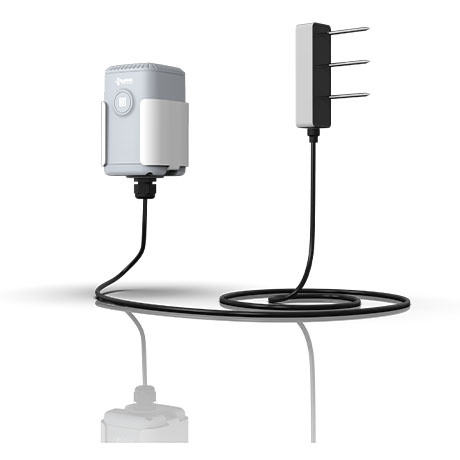
LoRaWAN Node
The LoRaWAN node collects sensor data through RS485 communication and transmits information wirelessly.
Main functions include:
Data acquisition
Local data processing
Wireless transmission
Low-power operation
LoRaWAN Gateway
The gateway receives wireless data from multiple monitoring points and uploads information to the monitoring platform.
Cloud Monitoring Platform
The monitoring platform enables centralized water quality management.
Users can access:
Real-time monitoring data
Historical records
Alarm notifications
Device status
Trend analysis reports
How a LoRaWAN River and Lake Monitoring System Works
The monitoring process follows a simple workflow.
Step 1: Sensor Installation
Water quality sensors are installed in rivers, lakes, reservoirs, or other target water bodies.
Step 2: Data Collection
Sensors measure selected water quality parameters according to predefined sampling intervals.
Step 3: Data Acquisition
The LoRaWAN node reads sensor data through RS485 communication.
Step 4: Wireless Transmission
The collected data is transmitted wirelessly from the LoRaWAN node to the gateway.
Step 5: Cloud Data Upload
The gateway uploads monitoring data to the cloud platform or customer server.
Step 6: Remote Data Access
Users can check real-time measurements, historical records, device status, and alarm information remotely.
Advantages of LoRaWAN for River and Lake Monitoring
LoRaWAN technology has become increasingly popular for freshwater monitoring projects because of its balance between communication range, power efficiency, and deployment flexibility.
Long-Range Communication
Suitable for:
Rivers
Reservoirs
Lakes
Wetlands
Low Power Consumption
Supports:
Battery-powered operation
Solar-powered deployments
Long-term outdoor monitoring
Reduced Installation Costs
Wireless communication reduces the need for:
Long-distance cables
Complex wiring systems
High infrastructure investment
Flexible Expansion
Additional monitoring points can be added according to future project requirements without major infrastructure modifications.
Typical River and Lake Monitoring Applications
River Water Quality Monitoring
Applications include:
Pollution source tracking
Watershed management
Environmental compliance
Long-term water quality analysis
Lake Monitoring
Common objectives include:
Algal bloom detection
Ecosystem protection
Recreational water management
Drinking water source protection
Reservoir Monitoring
Reservoir operators monitor:
Water quality trends
Nutrient concentrations
Temperature changes
Regulatory compliance
Best Practices for Monitoring Site Selection
Proper sensor placement improves monitoring accuracy and data reliability.
Consideration
Description
Sampling Location
Select representative monitoring points
Water Depth
Ensure suitable sensor installation depth
Flow Conditions
Consider water movement and mixing
Accessibility
Balance maintenance needs and location conditions
Communication Coverage
Ensure reliable LoRaWAN transmission
Power Availability
Select suitable battery or solar solutions
Future Trends in River and Lake Monitoring
The water monitoring industry continues to evolve through digital transformation.
IoT Monitoring Networks
Increasing numbers of connected sensors will enable larger-scale environmental monitoring networks.
Cloud-Based Analytics
Cloud platforms will provide:
Data visualization
Trend analysis
Automated reporting
AI-Assisted Monitoring
Artificial intelligence can support:
Anomaly detection
Pollution prediction
Environmental risk analysis
Choosing the Right River and Lake Monitoring Solution
Before selecting a monitoring system, organizations should evaluate:
Consideration
Questions to Ask
Water Body Type
River, lake, reservoir, or wetland?
Monitoring Parameters
Which water quality indicators are required?
Number of Monitoring Points
Single site or network deployment?
Power Availability
Grid power, solar, or battery?
Communication Requirements
LoRaWAN, cellular, or hybrid communication?
Platform Integration
Cloud platform or existing system integration?
Conclusion
River and lake water quality monitoring has become increasingly important for environmental protection, water resource management, and sustainable development.
By enabling remote monitoring, reducing wiring costs, supporting low-power operation, and allowing flexible expansion, these solutions help organizations build scalable and efficient water monitoring infrastructure for rivers, lakes, reservoirs, and other freshwater environments.
As environmental regulations become increasingly stringent and freshwater resources become more valuable, reliable water quality monitoring technology plays an essential role in protecting aquatic ecosystems and supporting sustainable water management.