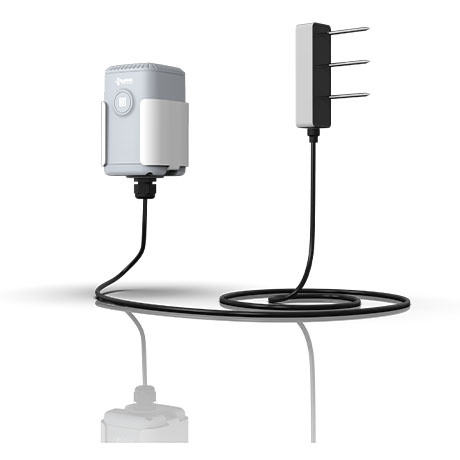
Agriculture increasingly relies on environmental data to support better field management decisions.
For farmland, orchards, greenhouse surroundings, and irrigation areas, understanding local weather conditions can help users monitor changes in the growing environment and improve agricultural management.
However, collecting weather data from agricultural areas is not always easy. Many agricultural monitoring locations are outdoors, widely distributed, and far away from convenient power supplies or communication infrastructure.
A LoRaWAN weather monitoring system provides a practical wireless solution for these conditions by combining meteorological sensors, LoRaWAN nodes, gateways, and data platforms into one complete monitoring package.
The BGT HYDROMET solution is designed for outdoor and distributed meteorological monitoring projects where customers need remote weather data collection, flexible installation, low-power operation, and cloud-based data access.
Why Is Weather Monitoring Important for Agriculture?
Agricultural environments are affected by many weather-related factors.
Temperature, humidity, and atmospheric pressure are important environmental parameters that help users understand local microclimate conditions.
In farmland, greenhouse surroundings, orchards, and irrigation areas, meteorological data can support agricultural management by providing information about the local environmental conditions.
Instead of relying only on occasional manual measurements, wireless weather monitoring allows users to collect data continuously from different locations.
This is especially useful when agricultural areas include:
Large farmland areas
Multiple monitoring points
Remote outdoor locations
Areas where cable installation is difficult
Challenges of Agricultural Weather Monitoring
Although weather monitoring is valuable for agriculture, installing monitoring equipment in outdoor environments can create several challenges.
1. Large Monitoring Areas
Agricultural sites are often spread across large areas.
A single monitoring point may not represent the environmental conditions of the entire site.
Multiple monitoring locations may be required to collect more representative environmental data.
2. Difficult Cable Installation
Traditional wired monitoring systems may require long-distance cables between sensors and monitoring equipment.
For farmland or remote field locations, cable installation can increase construction difficulty and cost.
The BGT HYDROMET documentation identifies that many outdoor monitoring projects face challenges such as difficult wiring, inconvenient power supply, and distributed monitoring locations.
3. Limited Power Availability
Many agricultural monitoring points are located away from buildings or fixed power sources.
A suitable monitoring solution needs to consider low-power operation and flexible power options.
4. Remote Data Access Requirements
Agricultural managers may need to check weather data without visiting every monitoring point.
A remote monitoring system allows users to view collected data through a platform instead of manually checking each device.
How Does a LoRaWAN Agricultural Weather Monitoring System Work?
The BGT HYDROMET agricultural meteorological monitoring solution uses the following architecture:
Step 1: Meteorological Sensor Collects Environmental Data
The meteorological sensor is installed in the agricultural monitoring area.
A typical sensor option is a:
Louver Box Temperature, Humidity and Pressure Sensor
It measures:
Temperature
Humidity
Atmospheric pressure
The louver box structure helps protect the sensing elements from direct sunlight and rain splash while allowing air circulation for environmental measurement.
The sensor uses RS485 communication and is designed to work together with a LoRaWAN node for wireless data transmission.
Step 2: LoRaWAN Node Collects Sensor Data
The LoRaWAN node receives sensor data through RS485 communication.
It then transmits the collected information wirelessly through the LoRaWAN network.
According to the project documentation, SN100-WSQ or SN200-WSQ can be selected depending on project requirements.
Step 3: Gateway Transfers Data to the Platform
The LoRaWAN gateway receives data from field nodes and forwards it toward the cloud platform or customer system.
Depending on the installation environment, customers can select indoor or outdoor gateway options.
Step 4: Users View Data Remotely
After data reaches the platform, users can access weather information through a PC dashboard or mobile app.
Depending on project configuration, the platform can support:
Real-time data viewing
Historical data curves
Device status monitoring
Data export
Alarm notification, if configured
Why Use LoRaWAN for Agricultural Weather Monitoring?
Compared with traditional wired monitoring approaches, LoRaWAN provides several advantages for agricultural applications.
1. Wireless Deployment Without Long-Distance Cabling
One of the biggest challenges in agricultural monitoring is installing communication cables across large outdoor areas.
The LoRaWAN solution reduces dependence on long-distance signal cables by using wireless communication between monitoring nodes and gateways.
This helps simplify deployment in farmland, orchards, and remote outdoor areas.
2. Low-Power Operation for Remote Locations
Agricultural monitoring sites may not have convenient electricity access.
The solution supports different power supply options:
Battery-powered node
Solar-powered node
External power supply
Solar-powered configurations are suitable for outdoor long-term monitoring sites where mains power is unavailable.
3. Long-Range Wireless Communication
For agricultural areas with distributed monitoring points, communication range is an important consideration.
According to the BGT HYDROMET solution documentation, the typical reference communication distance is:
Approximately 5–10 km in open areas
Approximately 1–2 km in urban environments
Actual range depends on terrain, buildings, antenna height, and surrounding conditions.
This allows customers to design monitoring networks according to actual site conditions.
4. Flexible Expansion for Multiple Monitoring Points
Agricultural projects may start with several monitoring locations and expand later.
A LoRaWAN network can support multiple sensor nodes through gateways.
According to the current solution documentation, one gateway can generally support hundreds of LoRaWAN sensor nodes, although actual capacity depends on project conditions.
For larger agricultural monitoring projects, additional gateways can be added to expand network coverage.
5. Remote Monitoring Without Frequent Site Visits
One of the main benefits of wireless agricultural monitoring is remote data access.
Users can check:
Current weather conditions
Historical trends
Device status
through a PC dashboard or mobile application.
This reduces the need for frequent manual inspections of distributed monitoring locations.
Agricultural Applications of LoRaWAN Weather Monitoring
The solution can be used in several agricultural-related scenarios.
Farmland Weather Monitoring
For large farmland areas, distributed weather monitoring points can collect environmental information from different locations.
Temperature, humidity, and atmospheric pressure data can help users understand local microclimate differences.
Orchard Monitoring
Orchards often contain outdoor areas where environmental conditions may vary between different locations.
Wireless monitoring allows flexible installation without extensive cable deployment.
Greenhouse Surrounding Monitoring
The solution can be used around greenhouse areas to collect environmental information from outdoor surroundings.
The collected data can help users understand changes in the local environment.
Irrigation Area Monitoring
For irrigation-related areas, weather monitoring data can provide additional environmental information to support agricultural management decisions.
Remote Agricultural Field Monitoring
Some agricultural locations are far from buildings, communication infrastructure, or fixed power sources.
For these remote sites, LoRaWAN provides a practical wireless monitoring method.
What Should Be Considered Before Deploying an Agricultural Weather Monitoring System?
Before selecting equipment, customers should confirm several project details.
Monitoring Parameters
What environmental parameters need to be measured?
The standard solution supports:
Temperature
Humidity
Atmospheric pressure
Other weather parameters can be selected according to project requirements.
Number of Monitoring Points
How many locations need monitoring?
This affects:
Number of sensors
Number of LoRaWAN nodes
Gateway coverage planning
Power Supply Conditions
Is mains power available?
If not, customers need to consider:
Battery-powered operation
Solar-powered operation
Other power solutions
Communication Distance
What is the approximate distance between monitoring nodes and gateways?
The installation environment should be evaluated because obstacles and terrain can affect communication performance.
Data Reporting Interval
How frequently does the customer need updated data?
The recommended reporting interval for most meteorological projects is 15 minutes.
Shorter reporting intervals can provide more frequent updates but may increase power consumption.
Platform Requirements
Does the customer need the BGT HYDROMET platform?
Or does the customer already have their own:
Data platform
LoRaWAN network server
Monitoring system
Platform integration requirements should be confirmed before order confirmation.
Conclusion
Agricultural weather monitoring requires a solution that can operate reliably in outdoor, distributed, and sometimes remote environments.
A LoRaWAN weather monitoring system provides a flexible approach by combining:
Compared with traditional wired systems, LoRaWAN can reduce long-distance cabling requirements, support battery or solar-powered deployment, enable remote data access, and allow flexible expansion of monitoring points.
For farmland, orchards, greenhouse surroundings, irrigation areas, and remote agricultural fields, BGT HYDROMET's LoRaWAN-based meteorological monitoring solution provides a practical way to collect and manage environmental data for outdoor monitoring projects.